For centuries, ancient Egypt was everywhere and nowhere at once.
Its pyramids still stood.
Its temples still carried carved symbols.
Its tombs still held painted scenes of gods, kings, workers, offerings, and journeys into the afterlife.
But the voices were missing.
People could look at ancient Egypt, admire it, collect it, and wonder about it, but they could not truly read what it was saying. The hieroglyphs remained beautiful, mysterious, and silent.
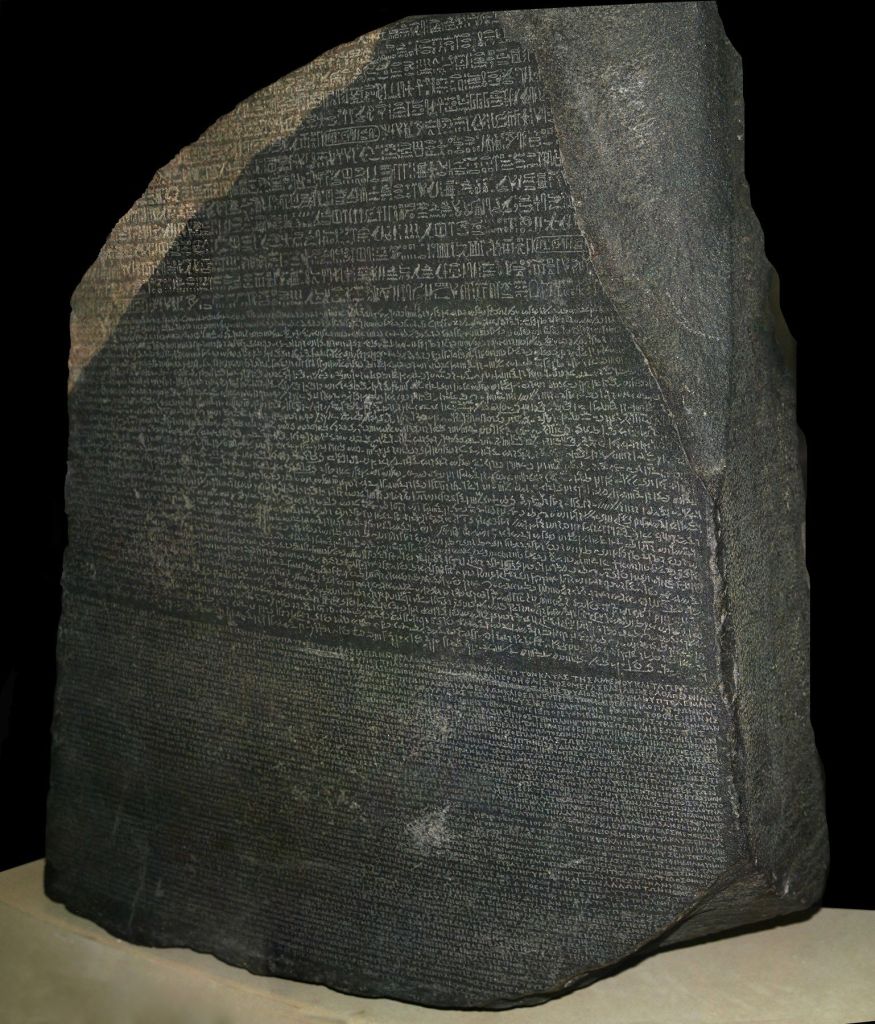
Then, in 1799, a broken stone was found near the town of Rosetta, known today as Rashid, in Egypt.
It was not gold.
It was not a royal treasure.
It was not even complete.
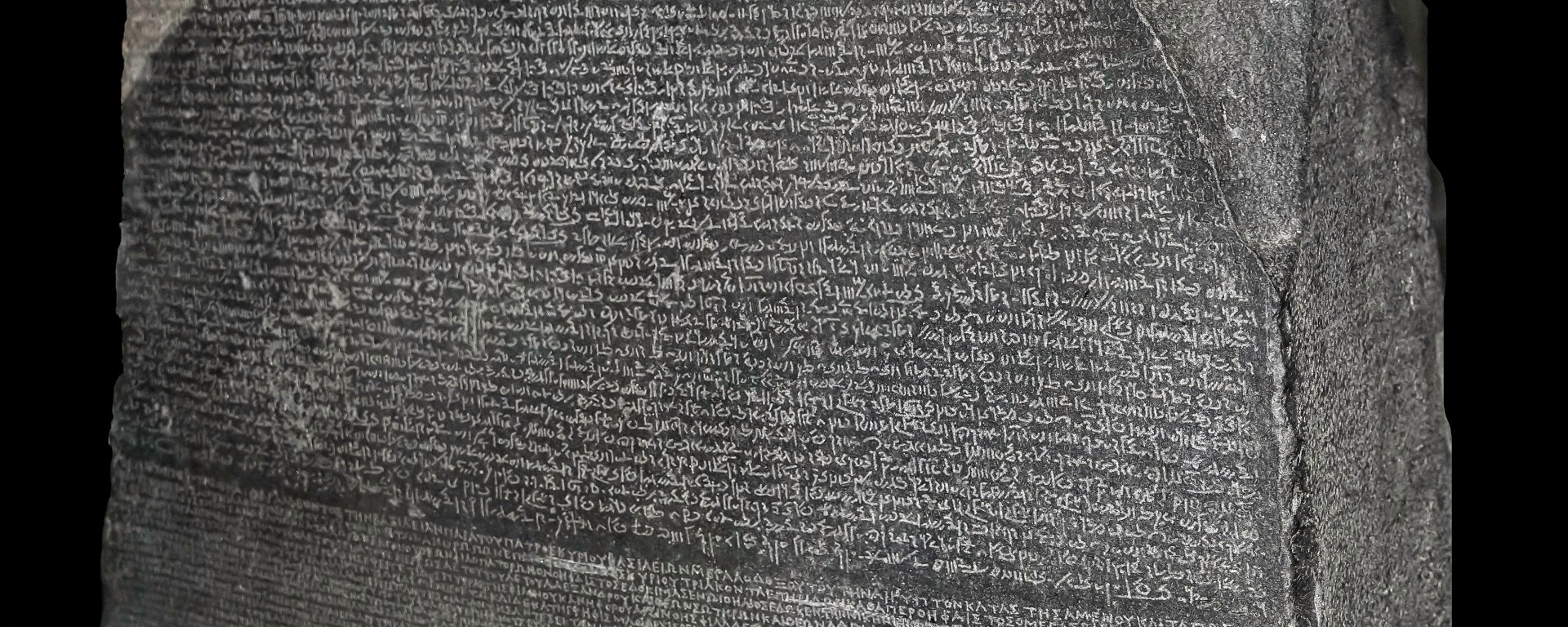
But it carried the same message in three scripts: hieroglyphic, Demotic, and Greek.
That made it one of the most important archaeological discoveries ever made.
This was the Rosetta Stone, and it helped give ancient Egypt its voice back.
A broken stone with three scripts
The Rosetta Stone was carved in 196 BCE, during the reign of Ptolemy V. It contains a decree issued by Egyptian priests, affirming honours for the young king.
At first glance, that may not sound world-changing.
A political decree.
A damaged slab.
A message about royal authority.
But the power of the Rosetta Stone was not only in what it said. It was in how it said it.
The same basic text appeared in three different scripts:
- Hieroglyphs, the formal sacred script often used on temples and monuments.
- Demotic, a more everyday Egyptian script used for practical writing.
- Greek, the administrative language of Egypt’s ruling Ptolemaic dynasty.
Greek could still be read.
Hieroglyphs could not.
That made the Greek text a bridge.
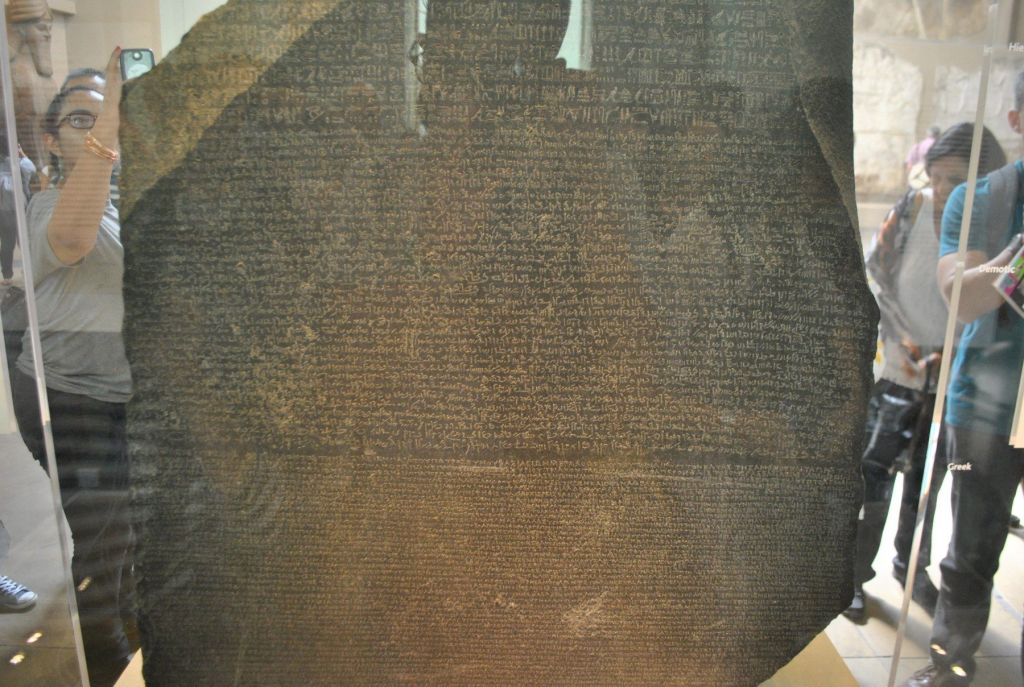
For the first time, scholars had a serious way to compare a known language with scripts that had been unreadable for centuries.
Why hieroglyphs had gone silent
Ancient Egyptian writing did not disappear overnight.
It faded gradually as Egypt changed under Greek, Roman, and later
Christian influence. Over time, knowledge of how to read hieroglyphs was lost.
The symbols remained everywhere, carved into stone and painted on walls, but their meaning slipped away.
Imagine walking through a library where every book is locked behind glass, and every page is written in a script no one can understand.
That was Egypt for centuries.
The monuments survived, but the language had become a closed door.
The Rosetta Stone did not open that door instantly.
But it gave scholars the keyhole.
The race to read Egypt
Once the stone was discovered, copies of its inscriptions spread among
European scholars. The challenge was clear: if the Greek text could be understood, perhaps the Egyptian scripts could be compared against it.
This was not simple.
Hieroglyphs were not just picture-writing. They could represent sounds, ideas, names, and symbols depending on context. For a long time, many scholars misunderstood them as purely symbolic.
Progress came slowly.
The English scholar Thomas Young made important advances, including work on royal names and signs within cartouches.
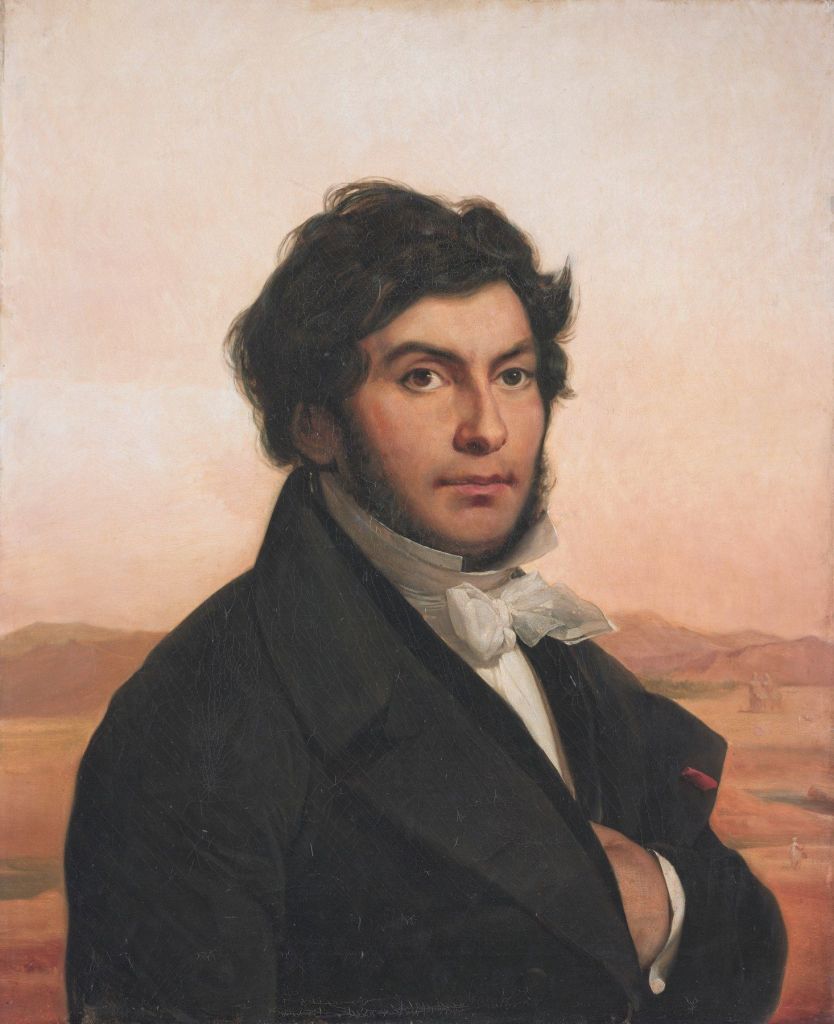
Then Jean-François Champollion, using his knowledge of Coptic and other evidence, made the breakthrough that transformed the study of ancient Egypt. In 1822, he announced his decipherment work, showing that hieroglyphs included phonetic elements and could be read as a real writing system.
The Rosetta Stone did not solve everything by itself.
But it made the breakthrough possible.
What the stone actually says
One of the funny things about the Rosetta Stone is that its actual message is not the most exciting part.
It is not a secret spell.
It is not a map to a hidden chamber.
It is not a lost prophecy.
It is a decree praising Ptolemy V and listing honours granted to him by priests.
In other words, it is ancient political messaging.
And yet, because it was written in multiple scripts, that ordinary decree became extraordinary.
That is one of history’s great surprises.
Sometimes the thing that changes the world is not dramatic because of its content, but because of its context.
The Rosetta Stone mattered because it connected worlds that had become separated by time.
Giving a civilization its voice back
Before the decipherment of hieroglyphs, ancient Egypt was often interpreted from the outside.
People could describe the ruins, collect objects, and build theories, but they could not fully hear Egyptian voices through Egyptian writing.
After the breakthrough, that changed.
Temple inscriptions, tomb texts, royal names, religious writings, administrative records, funerary texts, and everyday details could be read with new clarity.
Ancient Egypt became less silent.
Not perfectly understood.
Not fully solved.
But suddenly more human.
Kings had names.
Workers had records.
Prayers had words.
The dead had voices.
That is the real beauty of the Rosetta Stone.
It did not just help translate symbols.
It helped reconnect people to a world that had been waiting in plain sight.
More than one person, more than one stone
It is tempting to tell the Rosetta Stone story as if one artifact and one brilliant scholar solved everything at once.
The truth is more interesting.
The decipherment of hieroglyphs took years of comparison, debate, partial insights, mistakes, and competing theories. Champollion’s work was essential, but it built on earlier scholarship and on the survival of related languages and inscriptions.
The Rosetta Stone was not the only bilingual or multilingual inscription from ancient Egypt.
But it became the most famous because it arrived at the right moment, carried the right combination of scripts, and gave scholars the evidence they needed to move forward.
History often works that way.
A discovery matters not only because of what it is, but because of when people are finally ready to understand it.
A complicated legacy
The Rosetta Stone is also part of a more complicated story.
It was found during Napoleon’s campaign in Egypt and later came into British possession after the French defeat. Today, it is displayed in the British Museum, while Egypt has repeatedly called for its return.
That debate matters.
Artifacts are not just objects. They carry identity, memory, power, and questions about who gets to preserve, display, and interpret the past.
The Rosetta Stone helped the world understand ancient Egypt.
But it also asks a modern question:
Where should the keys to a civilization’s history belong?
That question does not have a simple answer, but it is part of the stone’s story now.
Why the Rosetta Stone still matters
The Rosetta Stone is famous because it helped solve a historical puzzle.
But its deeper meaning is bigger than translation.
It reminds us that the past is not truly gone when we fail to understand it.
Sometimes it is waiting for the right key.
A language can fall silent.
A civilization can be misunderstood.
A symbol can sit unread for centuries.
And then, with patience, comparison, and curiosity, a door can open again.
That is why the Rosetta Stone still captures the imagination.
It represents one of humanity’s greatest acts of listening across time.
Final thought
The Rosetta Stone did not shine like treasure.
It did not look like a weapon, a crown, or a wonder built to impress the world.
It was broken, practical, and easy to underestimate.
Yet it helped restore the voice of ancient Egypt.
That may be what makes it so powerful. It reminds us that history is not only discovered in grand monuments. Sometimes it is found in fragments. Sometimes the smallest surviving clue can change how we understand an entire civilization.
And now it’s your turn.
What do you think makes the Rosetta Stone so fascinating: the mystery of lost language, the breakthrough of decipherment, or the debate over where it belongs today?
Share your thoughts in the comments, and follow The Time Traveller’s Diary for more strange discoveries, historical anomalies, and forgotten clues from the past.
- The Code of Hammurabi: Why humans have always wanted justice written down
- Mansa Musa: The king so rich he put Mali on the map
- The Nazca Lines: Ancient Art, Sacred Paths, or Messages to the Sky?
- The Rosetta Stone: The ancient key that let us hear Egypt again
Discover more from The Time Traveller's Diary
Subscribe to get the latest posts sent to your email.
