
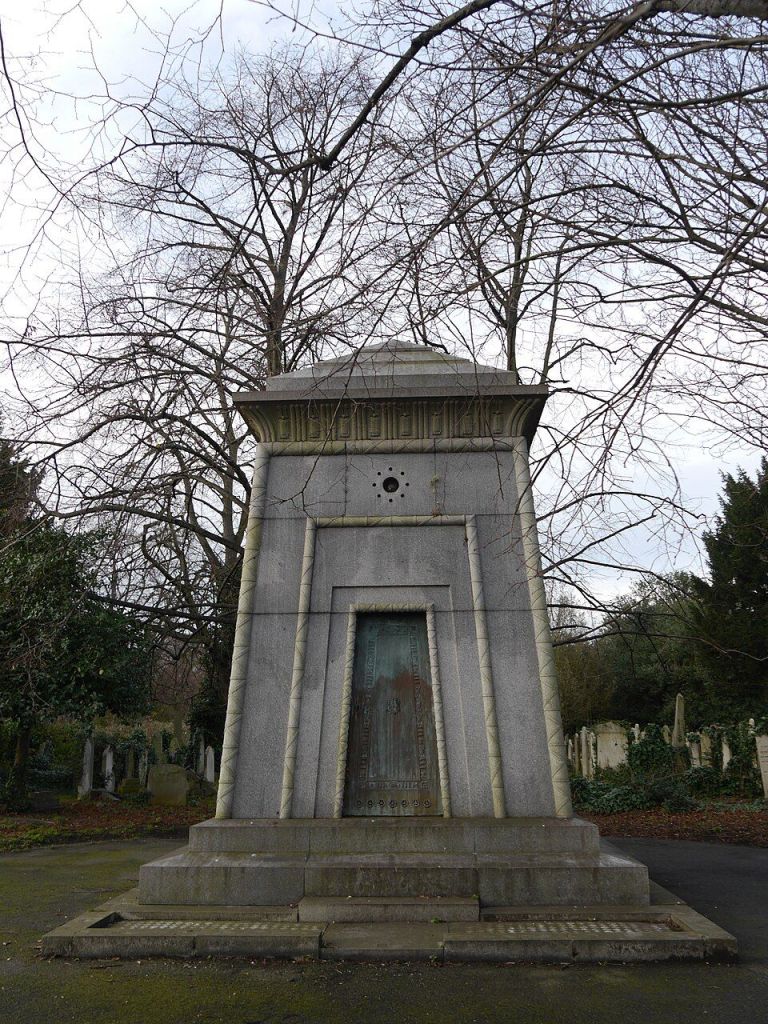
In London’s Brompton Cemetery, surrounded by weathered graves and quiet paths, stands one of the strangest monuments in the city.
- It is dark.
- It is imposing.
- It is Egyptian in design.
And according to one of London’s more unusual legends, it may contain a time machine.
This is the tomb of Hannah Courtoy, a wealthy 19th-century woman whose mausoleum has inspired curiosity, speculation, and more than a little imagination. Officially, it is a burial place. Unofficially, it has become one of Britain’s most fascinating cemetery mysteries.
But where does the story end and the legend begin?
Let’s step carefully through the gates.
Who Was Hannah Courtoy?
Hannah Courtoy was not a queen, a politician, or a famous inventor. Yet her grave has become far more famous than many people who held titles and power.
She lived in 19th-century London and had three daughters with John Courtoy, a wealthy merchant. Though Hannah and John never married, she inherited his fortune after his death, a detail that caused controversy at the time.
That inheritance allowed her to live well, and after her death in 1849, it helped create one of the most remarkable mausoleums in Brompton Cemetery.
Today, Hannah is buried there with two of her daughters.
But the tomb itself is what truly captured the public imagination.
A Tomb That Looks Like It Belongs to Another World
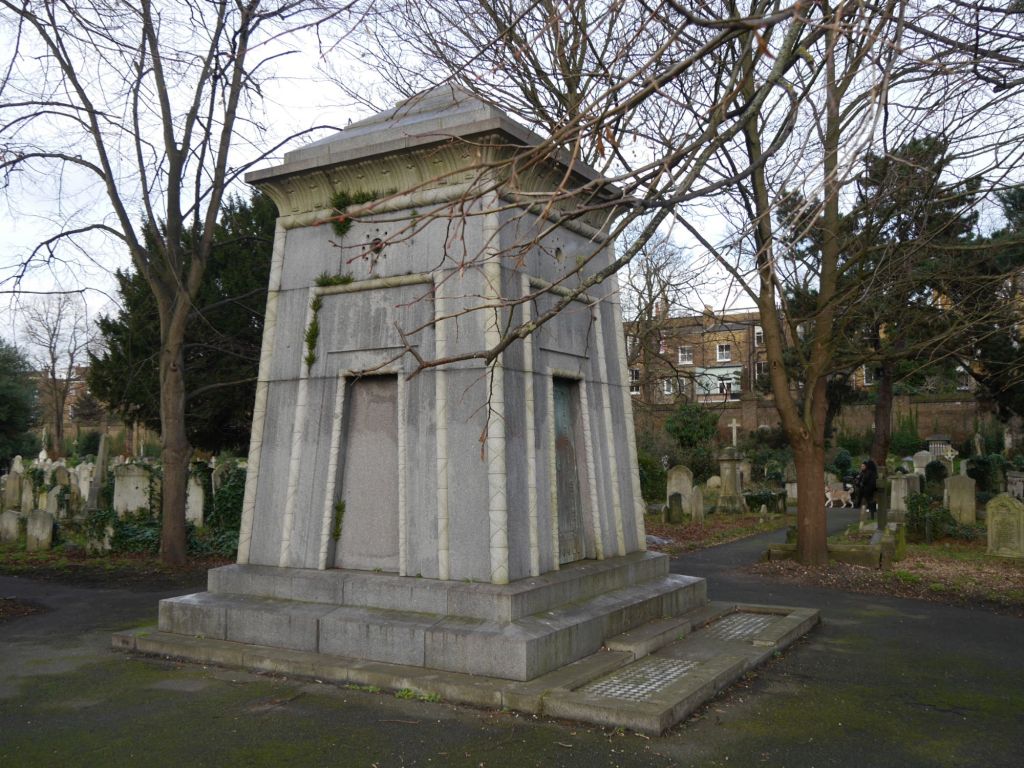
Hannah Courtoy’s mausoleum does not look like a typical Victorian grave.
Its design draws heavily from ancient Egyptian imagery, with a dark, severe presence that feels more like a sealed temple than a family memorial. In the 1800s, this made sense. Britain was caught up in Egyptomania, a fascination with ancient Egyptian culture, tombs, hieroglyphs, mummies, and the mysteries of death.
To Victorian eyes, Egypt represented age, secrecy, wisdom, and eternity.
So an Egyptian-style tomb was not random.
It was a statement.
A tomb like this said that death was not simply an ending. It hinted at hidden knowledge, ancient power, and the possibility that the past still had secrets to reveal.
Which, naturally, is exactly the kind of thing that makes people start whispering.
The Time Machine Legend
Here is where the story takes a strange turn.
According to local legend, Hannah Courtoy was connected to two unusual men: Joseph Bonomi, an Egyptologist and artist, and Samuel Alfred Warner, an inventor associated with ambitious and controversial technological claims.
Some versions of the story say Bonomi and Warner believed ancient Egyptian knowledge contained secrets about time, energy, or movement beyond ordinary understanding. Others go further and claim that, with Hannah’s financial support, they built a device inside her mausoleum.
A time machine.
To be clear, there is no solid evidence that a working time machine was ever built.
But the legend persists because the ingredients are almost too perfect:
- an Egyptian-style tomb,
- a wealthy and mysterious patron,
- an Egyptologist,
- an inventor,
- a sealed mausoleum,
- a lost key,
- and a cemetery already filled with Victorian drama.
It sounds like the opening chapter of a Gothic science fiction novel.
And maybe that is why it refuses to disappear.
Why Egypt? Why Time Travel?
The connection between ancient Egypt and time travel may sound strange today, but to the Victorian imagination, it had a certain logic.
Ancient Egypt seemed impossibly old.
Its monuments had outlasted empires.
Its tombs preserved bodies, names, symbols, and stories across thousands of years. To a society fascinated by death and obsessed with progress,
Egypt felt like a bridge between past and future.
Victorians were also living through an age of invention.
Railways were changing distance.
Telegraphs were changing communication.
Electricity was changing what seemed possible.
Science was moving so quickly that yesterday’s impossibility could become tomorrow’s technology.
In that world, the idea of an inventor, an Egyptologist, and a wealthy backer chasing the secrets of time may not have felt completely absurd.
It felt like a dream at the edge of possibility.
The Sealed Door
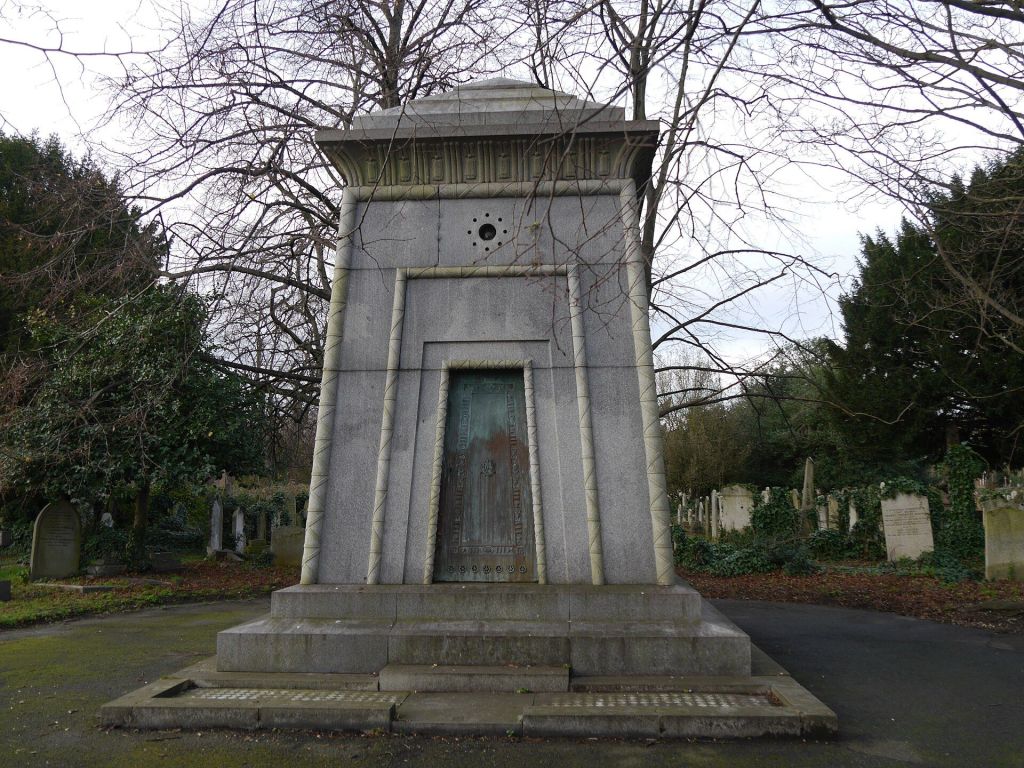
Part of the legend’s power comes from the tomb itself.
The mausoleum is sealed, and stories claim that the key was lost long ago.
Whether every detail of that story is perfectly reliable or not, the image is irresistible: a locked Egyptian tomb in the middle of London, hiding something no one has seen for generations.
That sealed door does a lot of work.
If the tomb were open and ordinary inside, the legend would likely fade.
But because it remains closed, imagination fills the space.
Maybe there is only a burial chamber.
Maybe there are inscriptions.
Maybe there is nothing unusual at all.
Or maybe, as someone will inevitably say, it could be a time machine.
And honestly, for a blog called The Time Traveller’s Diary, how could we not take a closer look?
What Is Most Likely True?
The most reasonable explanation is also the most human one.
Hannah Courtoy’s tomb is probably not a time machine. It is likely an Egyptian
Revival mausoleum shaped by Victorian fashion, wealth, mourning, and fascination with death.
But that does not make it boring.
In fact, the realistic explanation may be even more interesting.
This tomb shows us how people in the 19th century tried to make sense of mortality. They borrowed symbols from ancient Egypt because Egypt seemed eternal. They built grand tombs because death felt too final. They surrounded themselves with mystery because mystery made loss feel larger, deeper, and perhaps less ordinary.
The time machine legend may not be true in a literal sense.
But symbolically?
A tomb is already a kind of time machine.
It carries a name, a story, a style, and a moment in history forward into the future. It lets people like us stand centuries later and wonder who
Hannah Courtoy was, what she believed, and why her resting place still feels so strange.
That is its real power.
Why the Story Still Works
Hannah Courtoy’s tomb fascinates people because it sits at the perfect crossroads of fact and imagination.
There really is a tomb.
There really was a Hannah Courtoy.
There really was a Victorian fascination with Egypt.
There really were unusual people connected to the story.
And there really is a sealed, strange-looking mausoleum in Brompton Cemetery that seems designed to attract questions.
The time machine may be legend.
But the curiosity is real.
And sometimes that is enough to keep a mystery alive.
Final Thought
Hannah Courtoy’s tomb probably does not contain a machine capable of carrying someone through time.
But it does something almost as powerful.
It pulls us backward.
Back to Victorian London.
Back to Egyptomania.
Back to a world where death, science, invention, and ancient symbols all tangled together in the public imagination.
The tomb may not break the laws of time, but it reminds us that the past is never really gone. It waits in stone, in stories, in symbols, and sometimes behind sealed doors.
And now it’s your turn.
Do you think Hannah Courtoy’s tomb is simply a product of Victorian Egyptomania, or is there something more unusual hiding behind the legend?
Share your thoughts in the comments, and follow The Time Traveller’s Diary for more strange discoveries, historical anomalies, and forgotten clues from the past.
Discover more from The Time Traveller's Diary
Subscribe to get the latest posts sent to your email.
