In 1974, farmers digging a well near Xi’an, China, uncovered something extraordinary beneath the soil.
At first, there were fragments.
Then faces.
Then soldiers.
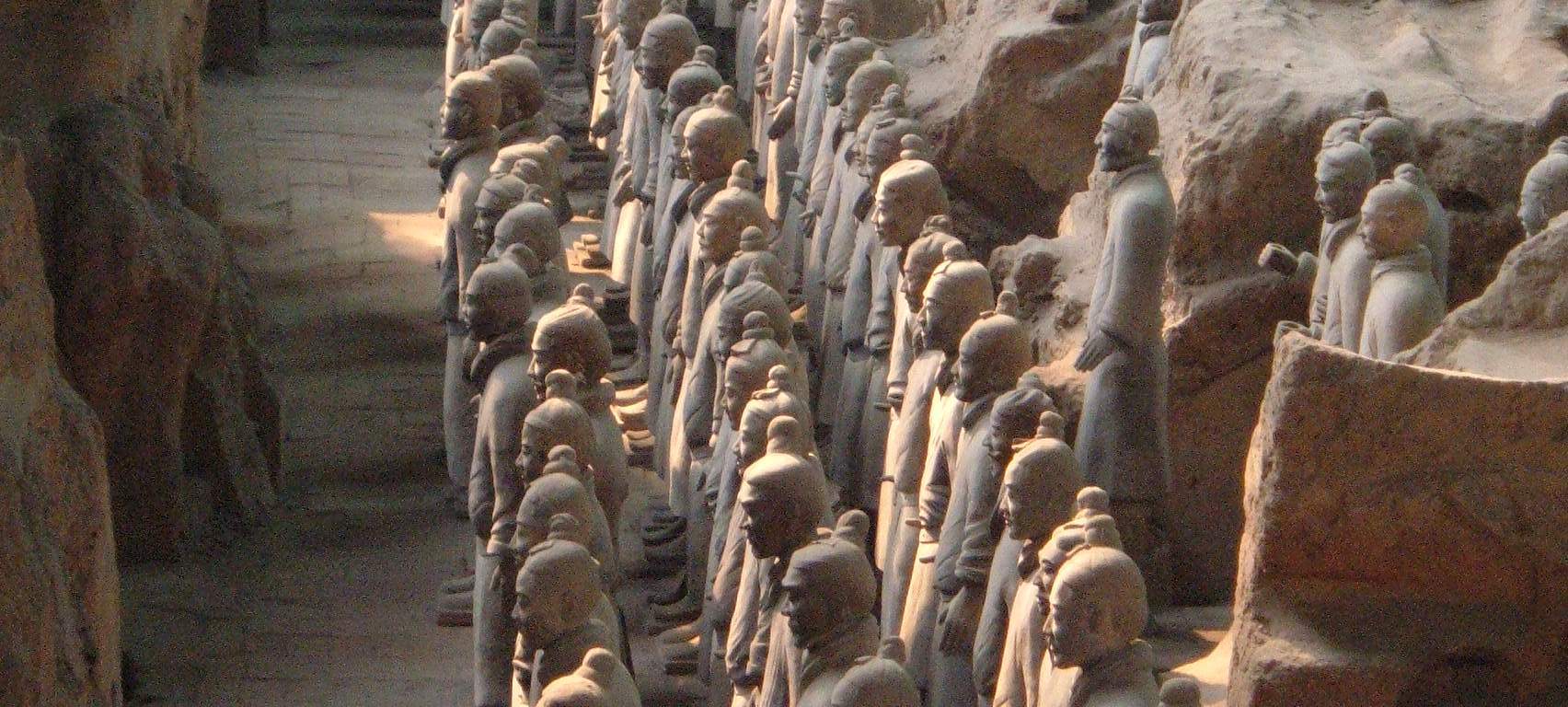
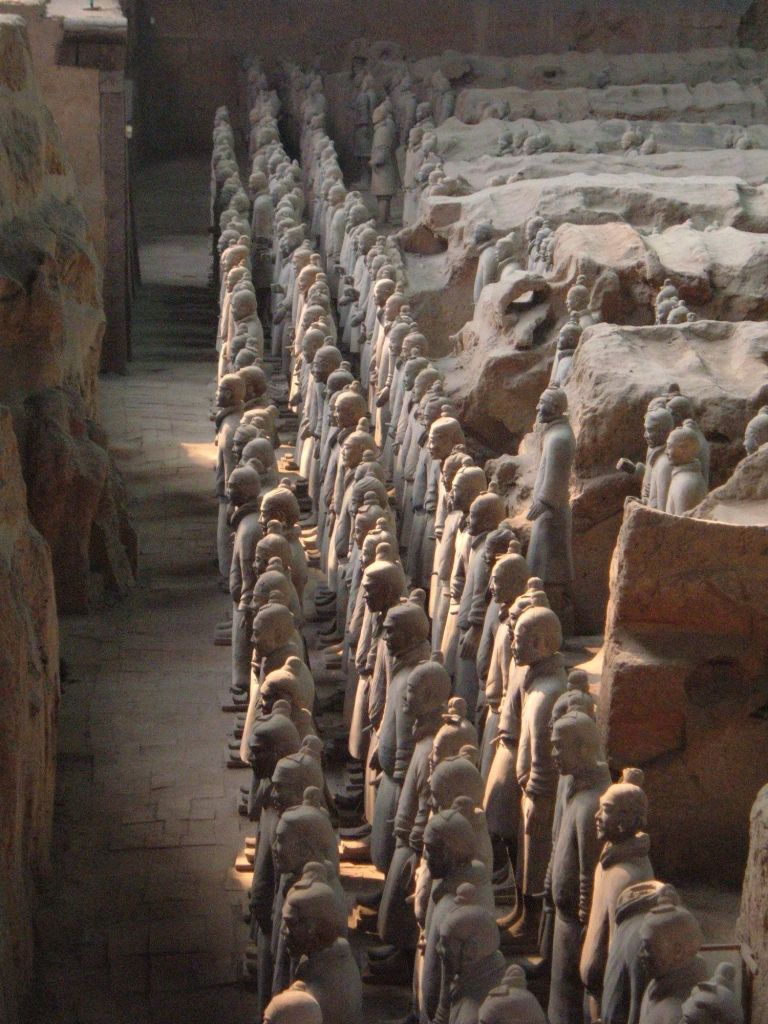
Eventually, archaeologists realized they had found one of the most astonishing discoveries in history: a vast underground army made of clay, standing silently in battle formation after more than 2,000 years.
This was the Terracotta Army, built for Qin Shi Huang, the first emperor of a unified China.
But these soldiers were not made for the world of the living.
They were made for what came next.
The emperor who unified China
Qin Shi Huang was one of the most powerful rulers of the ancient world.
In 221 BCE, he became the first emperor of a unified China, ending the Warring States period and bringing several rival kingdoms under one centralized rule. His reign was short, but its impact was enormous.
He standardized writing, currency, weights, measures, and even axle widths. He expanded roads, strengthened imperial control, and shaped the foundations of an empire that would influence Chinese history for centuries.
But Qin Shi Huang was not only concerned with ruling in life.
He was deeply concerned with death.
Like many ancient rulers, he believed the afterlife required preparation. But where others built tombs, offerings, or monuments, Qin Shi Huang created something on a scale almost impossible to imagine.
He built an empire beneath the earth.
An army made of clay
The Terracotta Army was not a small burial display. It was a military force.
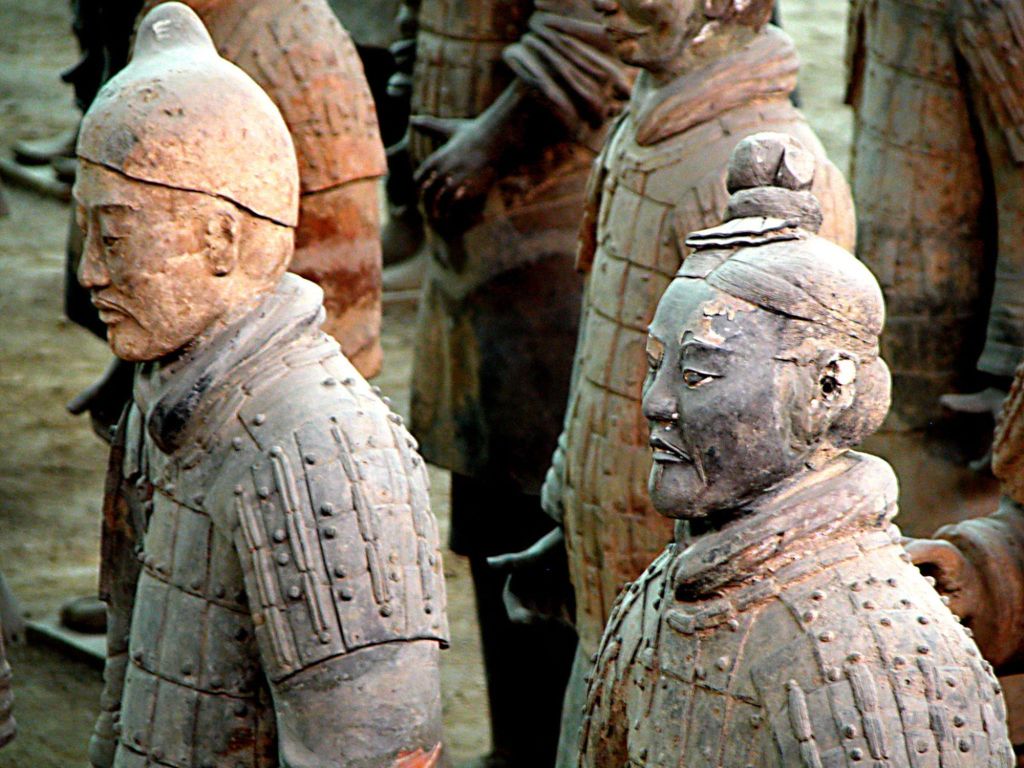
Thousands of life-size soldiers were arranged in formation, along with horses, chariots, weapons, officers, and attendants. Each figure was made from terracotta clay, but they were not identical copies. Many have different facial features, hairstyles, armour, expressions, and ranks.
That detail matters.
These were not just statues.
They were individuals within an army.
The effect must have been overwhelming. Row after row of silent warriors, waiting in the dark, prepared to guard their emperor beyond death.
It is magnificent.
It is unsettling.
And it is one of the clearest examples of how seriously the ancient world took the journey into whatever came after life.
Why build an army for the afterlife?
To understand the Terracotta Army, we have to understand how ancient people often viewed death.
For Qin Shi Huang, the afterlife may not have been a vague spiritual idea. It may have been a continuation of power. If he ruled an empire in life, then perhaps he expected to rule one in death as well.
The army was protection.
It was status.
It was control.
It was also a statement.
Even after death, the emperor would not stand alone.
This is where the story becomes more than archaeology. It becomes human.
Because beneath the grandeur, there is something familiar: fear of losing control, the desire to be remembered, and the hope that something of us will continue after we are gone.
Most of us do not build underground armies.
But many of us do build legacies.
The workers behind the wonder
The Terracotta Army is often remembered as the emperor’s achievement, but it was built by human hands.
Craftsmen, labourers, artisans, engineers, and countless workers shaped this underground world. Some made bodies. Some shaped heads. Some added details. Some assembled armour.
Some painted the figures in colours that have mostly faded with time.
That may be the most powerful part of the story.
Qin Shi Huang wanted immortality, but the thing that survived was not only his name.
It was their work.
Their hands.
Their skill.
Their patience.
The emperor ordered the army, but ordinary people made it real.
That is worth remembering.
The colours we almost lost
Today, we usually see the Terracotta Warriors in earthy tones of grey and brown. But when they were first made, many were brightly painted.
Their armour, clothing, faces, and details would have looked far more vivid than they do now.
Over time, exposure, decay, and excavation caused much of that colour to vanish. In some cases, pigments began to flake shortly after being exposed to air.
There is something strangely poetic about that.
The emperor tried to preserve power forever, but even his eternal army changed the moment it returned to the world.
History survives, but rarely untouched.
The unopened tomb
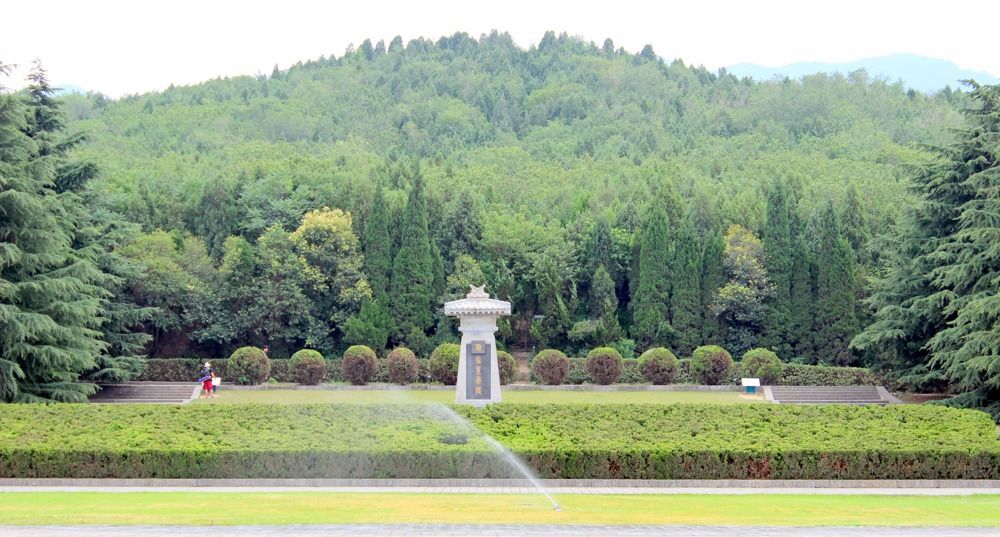
The Terracotta Army is only part of a much larger mausoleum complex.
The central tomb of Qin Shi Huang itself has not been fully excavated.
Ancient historian Sima Qian described a burial chamber filled with palaces, treasures, flowing rivers of mercury, and a ceiling representing the heavens.
How much of that description is literal remains uncertain.
But the mystery has not faded. Modern testing has found unusually high mercury levels in the area around the tomb, which keeps the old account alive in the minds of historians and archaeologists.
For now, the emperor’s central burial chamber remains sealed.
That restraint is important.
Archaeology is not just about discovery.
It is also about preservation. Sometimes the best way to protect the past is to wait until we are ready to uncover it properly.
In a world that often wants every mystery solved immediately, Qin Shi Huang’s unopened tomb reminds us that some secrets deserve patience.
Power, fear, and legacy
The Terracotta Army is impressive because of its scale.
But it endures because of what it reveals.
Qin Shi Huang had enormous power, but power did not free him from fear.
He unified kingdoms, commanded armies, and shaped history, yet still prepared obsessively for death.
That makes him feel less distant.
Not gentle.
Not simple.
Not necessarily admirable.
But human.
The Terracotta Army asks a quiet question:
What do we build when we are afraid to disappear?
Some people build monuments.
Some build families.
Some build art.
Some build businesses, books, communities, or ideas.
Most will never be buried with thousands of soldiers, but the desire underneath is familiar. We want something to remain. We want proof that we were here. We want our lives to mean something beyond the moment we are living.
That is the part of the Terracotta Army that still speaks.
Why the Terracotta Army still matters
The Terracotta Army is not just a wonder of ancient China. It is a reminder of how deeply people have always wrestled with mortality.
It shows us ambition at its highest level.
It shows us fear dressed as power.
It shows us art in service of empire.
It shows us the labour of thousands preserved beneath the earth.
And it reminds us that even the most powerful ruler in the world could not escape the same truth every person faces.
Life ends.
The question is what we leave behind.
Final thought
The Terracotta Army was built to protect one emperor in the afterlife, but more than 2,000 years later, it protects something else: a memory of ancient ambition, craftsmanship, fear, and belief.
Qin Shi Huang wanted to rule forever.
Instead, he left behind a silent army that asks us to think about legacy itself.
Not just the grand kind carved into history books, but the quieter kind built through what we create, protect, teach, and pass on.
And now it’s your turn.
What do you think the Terracotta Army says more about: power, fear, faith, or legacy?
Share your thoughts in the comments, and follow The Time Traveller’s Diary for more strange discoveries, historical anomalies, and forgotten clues from the past.
Discover more from The Time Traveller's Diary
Subscribe to get the latest posts sent to your email.
