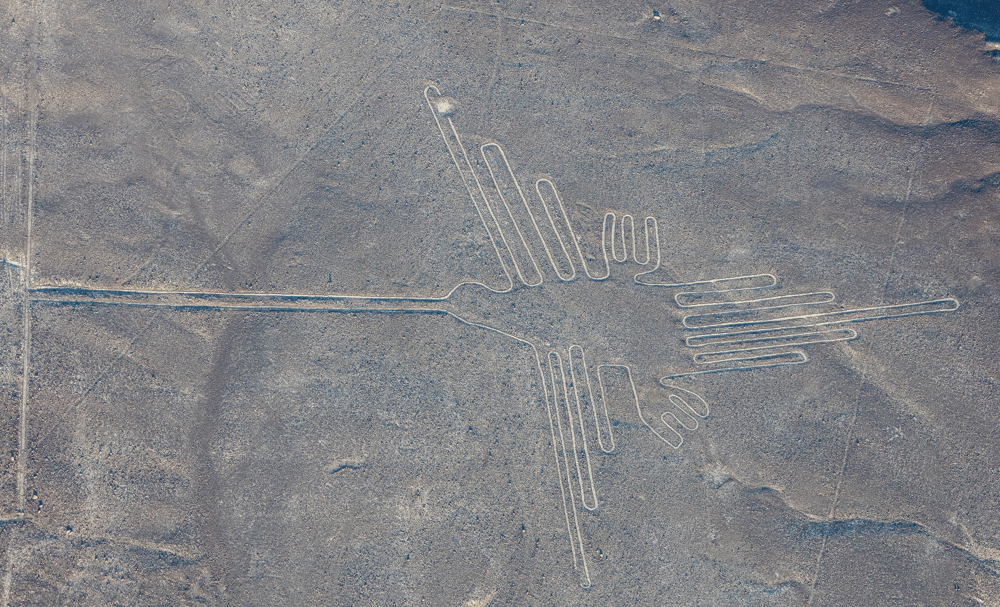
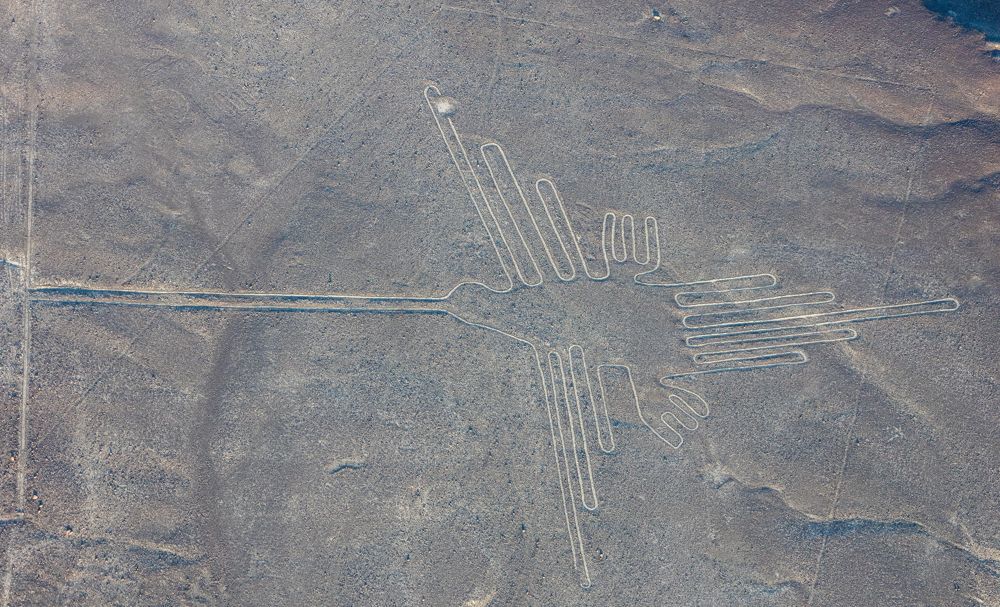
In the dry desert plains of southern Peru, enormous shapes stretch across the earth.
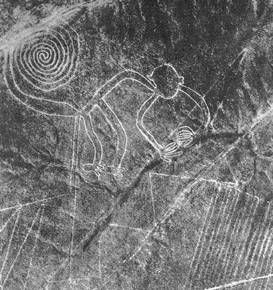
A monkey.
A spider.
A hummingbird.
Long straight lines that seem to run toward the horizon.
Spirals, triangles, animals, plants, human-like figures, and strange forms that only fully reveal themselves from above.
These are the Nazca Lines, one of the most famous and mysterious archaeological landscapes in the world.
For decades, people have asked the same question:
Why would ancient people create giant images on the desert floor that are best seen from the sky?
Were they sacred pathways?
Offerings to the gods?
Astronomical markers?
Ritual art?
Or, as someone inevitably says anytime ancient people do anything impressive, could it be aliens?
Probably not.
But the real story may be even more fascinating…
What are the Nazca Lines?
The Nazca Lines are a vast collection of geoglyphs carved into the desert floor of Peru’s coastal plain, about 400 kilometres south of Lima. UNESCO describes the Lines and Geoglyphs of Nasca and Palpa as covering about 450 square kilometres, with designs that include living creatures, stylized plants, imaginary beings, and geometric figures stretching across the landscape.
They were made by removing the darker surface stones of the desert, exposing the lighter soil beneath.
That sounds simple.
But the result is astonishing.
Because the region is so dry, and because there is little wind or rain compared with many other places, these markings have survived for centuries. What might have disappeared elsewhere remained etched into the earth, here.
Not perfectly.
Not untouched.
But visible enough to keep asking questions.
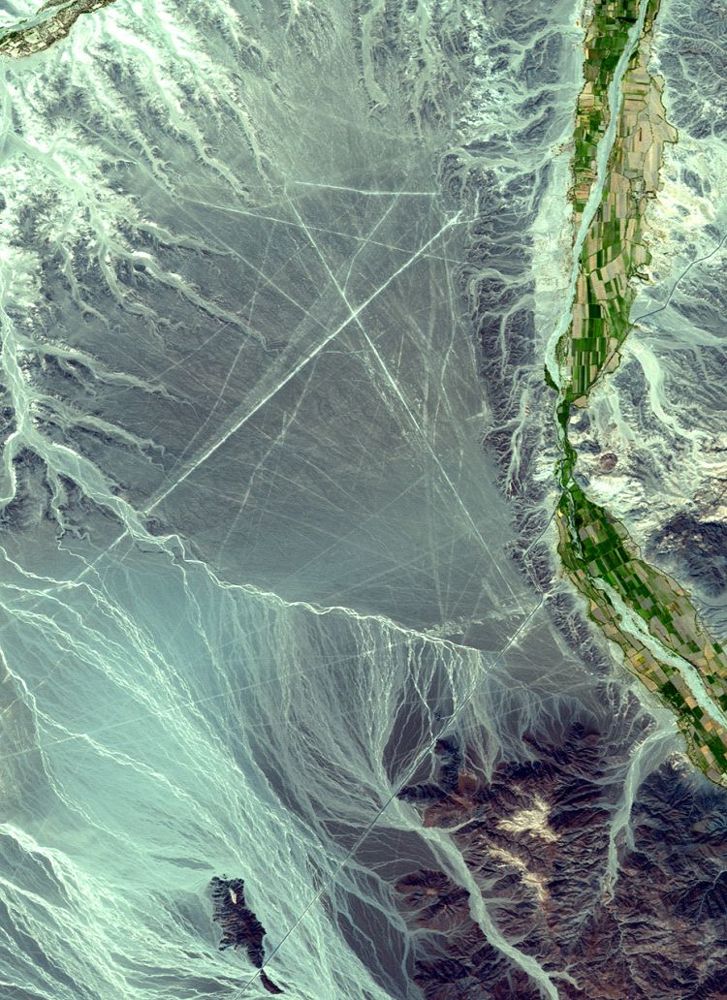
A landscape made for the sky
The most famous Nazca figures are best appreciated from above.
That detail is what made the mystery so irresistible.
Why create something so large that it could not be fully seen from the ground?
The answer may be that the Nazca people did not need to see the whole image the way we do from airplanes, drones, or satellite photos. These designs may have been experienced by walking through, around, or near them.
Some may have been pathways.
Some may have marked ritual spaces.
Some may have connected to water, fertility, pilgrimage, or the sacred landscape itself.
In other words, they may not have been made for “viewing” in the modern sense.
They may have been made for participation.
Water, worship, and survival
The Nazca lived in a harsh desert environment where water mattered deeply.
That matters when trying to understand the lines.
In a dry landscape, water is not just practical. It becomes spiritual. It shapes agriculture, settlement, ritual, fear, and hope.
Many researchers believe the Nazca Lines were connected in some way to ceremony, fertility, water, or movement across sacred space. That does not mean every line had the same purpose. In fact, one of the biggest mistakes we can make is assuming there was only one answer.
A landscape this large, created across generations, may have had many meanings.
- Some lines may have been processional routes.
- Some figures may have represented animals tied to belief or environment.
- Some geometric patterns may have marked ritual movement.
- Some may have changed meaning over time.
The mystery is not that we have no ideas…the mystery is that the ideas may overlap.
The problem with the alien theory
Let’s talk about the obvious one.
The Nazca Lines have often been pulled into ancient astronaut theories. The argument usually goes something like this: the lines are huge, they are best seen from above, and therefore maybe they were made for visitors from the sky.
It is a fun theory.
It is also not the most convincing one.
Ancient people were perfectly capable of planning large works, observing landscapes, using sightlines, and creating designs at scale. The fact that something is impressive does not mean it required extraterrestrial help.
Still, the alien theory keeps returning because it scratches a very human itch.
It lets us imagine that the ancient world was not only mysterious, but cosmic.
The better question may not be, “Were they made for aliens?”
The better question is:
Why do we keep reaching for aliens before we fully appreciate what ancient humans could do?
AI is changing the story
Here is where the Nazca Lines become even more exciting.
This is not just an old mystery sitting unchanged in the desert. New research is still reshaping what we know.
In 2024, researchers from Yamagata University’s Nazca Institute, working with IBM Research, reported that AI-assisted analysis helped identify and document 303 new figurative geoglyphs in only six months. Yamagata University said the use of AI created a major increase in the rate of discovery.
The peer-reviewed PNAS study reported the same discovery of 303 new figurative geoglyphs across the Nazca region, a UNESCO World Heritage site.
That is incredible.
For a long time, the Nazca Lines were treated as a known mystery: famous, photographed, debated, and mostly familiar.
But AI and drone-assisted surveys are revealing that the desert still has more to say.
The ground was not finished speaking.
We simply needed better ways to listen.
What the new discoveries suggest
The newer discoveries are especially important because many of them are smaller and harder to spot than the famous giant figures.
That changes how we think about the whole landscape.
The Nazca Lines may not have been only about grand images visible from the sky. Some smaller figures may have been connected to paths, movement, storytelling, ritual, or local viewing from the ground.
That makes the mystery feel more human.
Not every geoglyph needed to impress the heavens.
Some may have guided people.
Some may have marked routes.
Some may have told stories.
Some may have served communities moving through the landscape.
The giant figures are spectacular, but the smaller discoveries remind us that ancient sacred spaces were not always built for outsiders looking down.
They were lived, walked, remembered, and experienced.
A fragile wonder
The Nazca Lines have survived for centuries, but that does not mean they are safe.
They are fragile.
A vehicle can scar them.
Mining pressure can threaten nearby heritage zones.
Modern development can disturb ancient landscapes before they are fully understood.
In 2025, Peru reinstated full protection of the Nazca Lines reserve after backlash over a controversial reduction of protected area, with AP reporting concerns about informal mining and protection of the wider archaeological landscape.
That is an important reminder.
Ancient mysteries do not only need solving.
They need protecting.
Because once a line in the desert is destroyed, it cannot simply be rewritten.
Why the Nazca Lines still matter
The Nazca Lines matter because they force us to look at ancient creativity differently.
They were not pyramids.
They were not stone temples.
They were not statues sealed inside tombs.
They were marks on the land itself.
The Nazca people used the desert as their canvas.
That idea is powerful.
They turned a harsh landscape into a sacred one. They made images so large that modern people still fly over them in wonder. They created something that has lasted long enough for satellites, drones, archaeologists, and AI to join the conversation.
And yet, we still do not fully know what they meant.
That is not failure.
That is the beauty of the mystery.
Final thought
The Nazca Lines may not be alien runways, secret landing strips, or messages to visitors from another world.
But they are still messages.
Messages from people who understood their land, their sky, their rituals, and their fears in ways we are still trying to recover.
They remind us that ancient people did not only build upward in stone.
Sometimes, they drew outward across the earth.
Sometimes, they made the landscape itself sacred.
And sometimes, they left behind something so vast and strange that centuries later, we are still standing at the edge of it, asking what it means.
And now it’s your turn.
Do you think the Nazca Lines were sacred pathways, ritual art, astronomical markers, or something else entirely?
Share your thoughts in the comments, and follow The Time Traveller’s Diary for more strange discoveries, historical anomalies, and forgotten clues from the past.
Discover more from The Time Traveller's Diary
Subscribe to get the latest posts sent to your email.
