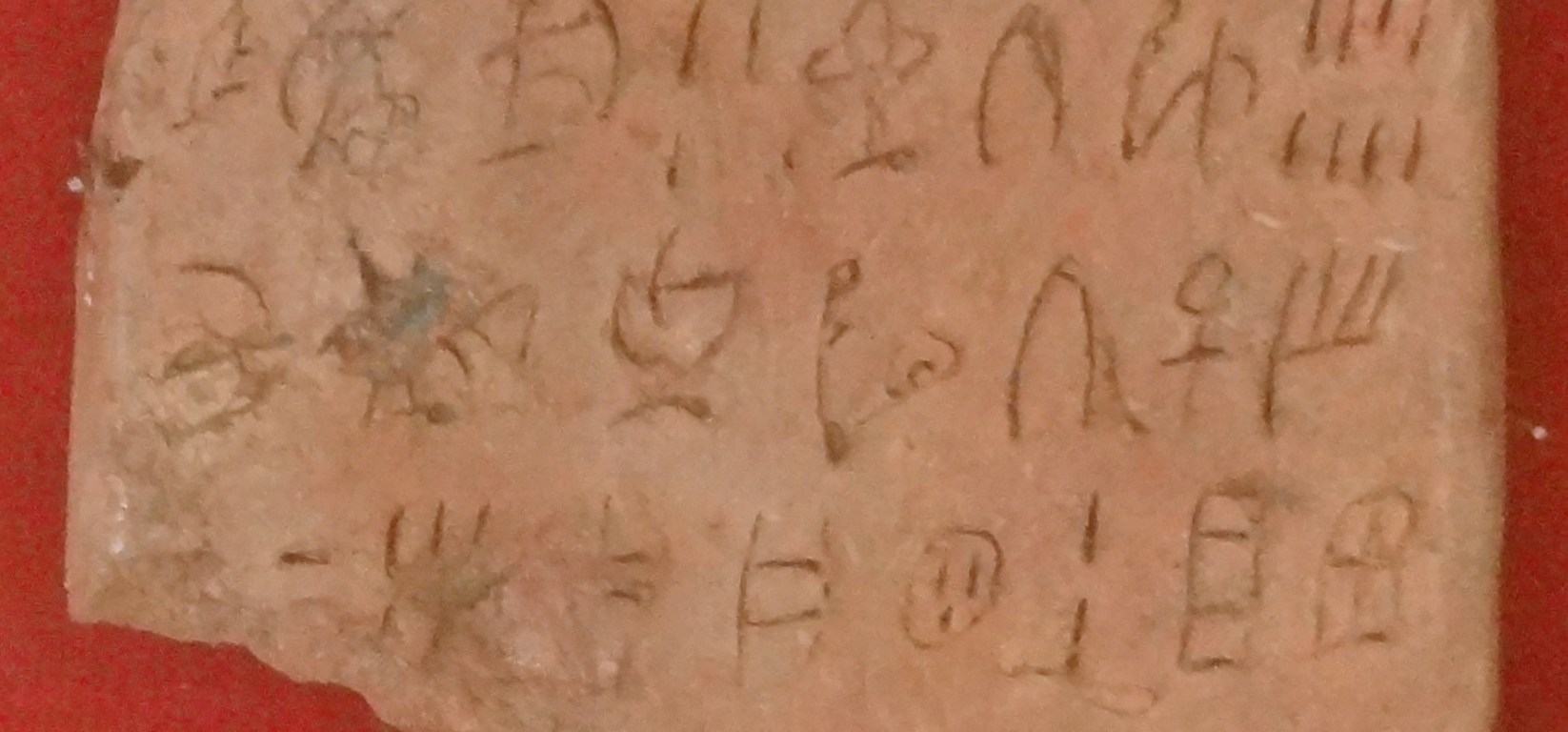
Pick up a clay tablet from Bronze Age Crete and you can do something remarkable. You can sound it out, syllable by syllable, using sound values borrowed from a related script. What you cannot do, and what no one has done in more than a century of trying, is understand a single sentence of it. The signs are clear. The numbers add up. The words stay silent. Linear A is a script we can pronounce but cannot read.
An archive saved by fire
Linear A was the writing of Minoan Crete, used from around 1850 to around 1450 BCE, according to the World History Encyclopedia. Other reputable sources give slightly different ranges: Wikipedia gives 1800 to 1450 BC, and Britannica approximately 1850 BC to 1400 BC. The Minoans built large palace complexes at Knossos, Phaistos, Malia and Zakros, and their scribes kept records on small rectangular clay tablets, most likely for administration.
The script came to modern attention when Arthur Evans began excavating Knossos in 1900. Evans named it “Linear” because its characters were simple lines inscribed in clay, unlike the more pictographic Cretan hieroglyphs of the same period, which also remain undeciphered.
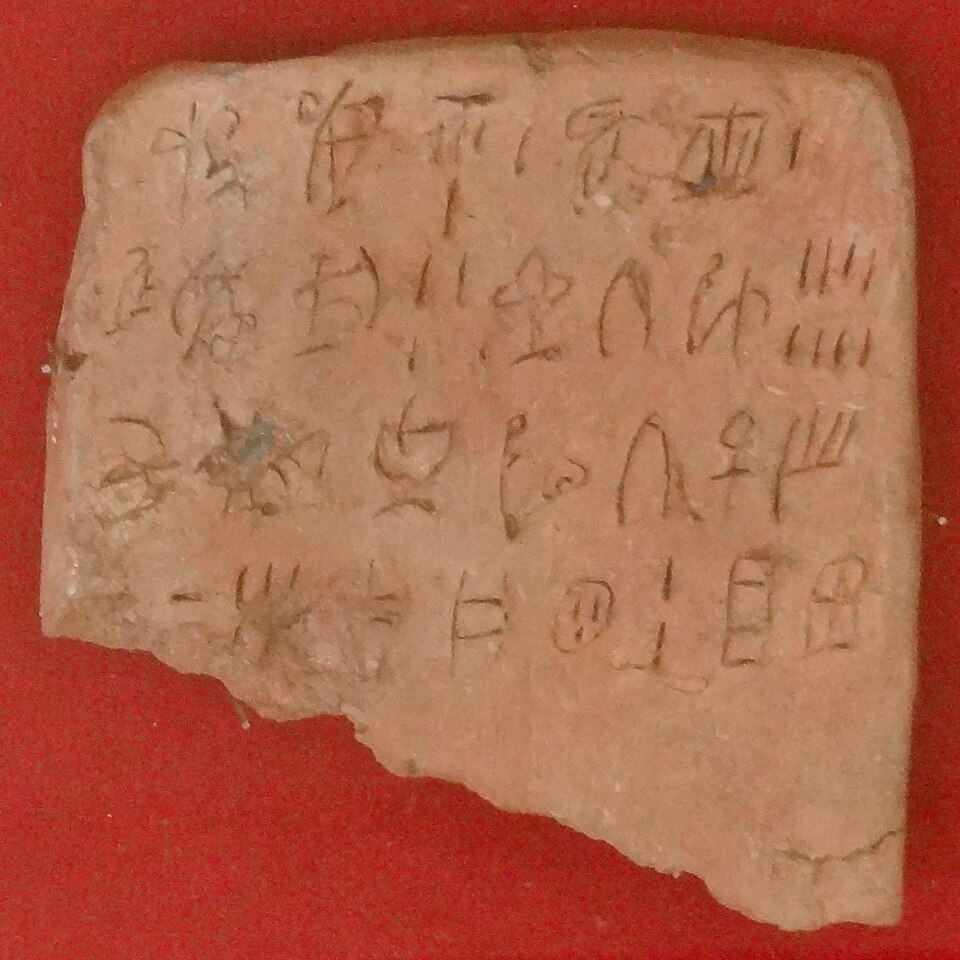
The surviving corpus is small, and that smallness is the heart of the problem. Counts differ: roughly 1,400 inscriptions amounting to about 7,400 sign tokens (Wikipedia’s summary of the scholarship), or just over 1,500 (the Mnamon database). Either way, the whole body of Linear A writing would fill under two pages of ordinary typeset text. About 90 percent of the inscriptions are incised on clay: tablets, bars, roundels and sealings.
Roughly half of the known inscriptions come from Hagia Triada in southern Crete (1,269 objects), followed by Zakros (595), Khania, modern Chania (313), Phaistos (65) and Knossos (32). Beyond Crete, Linear A turns up on Aegean islands and at Miletus in Asia Minor, a footprint that matches Minoan trade.
Much of what survives exists because of disaster. Most of the corpus comes from the final decades of the Late Minoan IB period, when fiery destructions baked clay tablets that would otherwise have been erased and reused. After the destructions of around 1450 BCE, Linear A was never again used for administration. Why the towns burned is still debated, and this post does not choose between the explanations offered.
The sister script that talked
Here is the contrast that makes Linear A so frustrating. Linear B, the script of the Mycenaean Greeks who followed the Minoans on Crete, was developed from Linear A, and about 70 percent of Linear A symbols appear in it. In 1952, Michael Ventris deciphered Linear B, building on earlier pattern work by Alice Kober and working with John Chadwick, and showed that it recorded Mycenaean Greek. A script nobody could read turned out to be hiding a language scholars already knew.
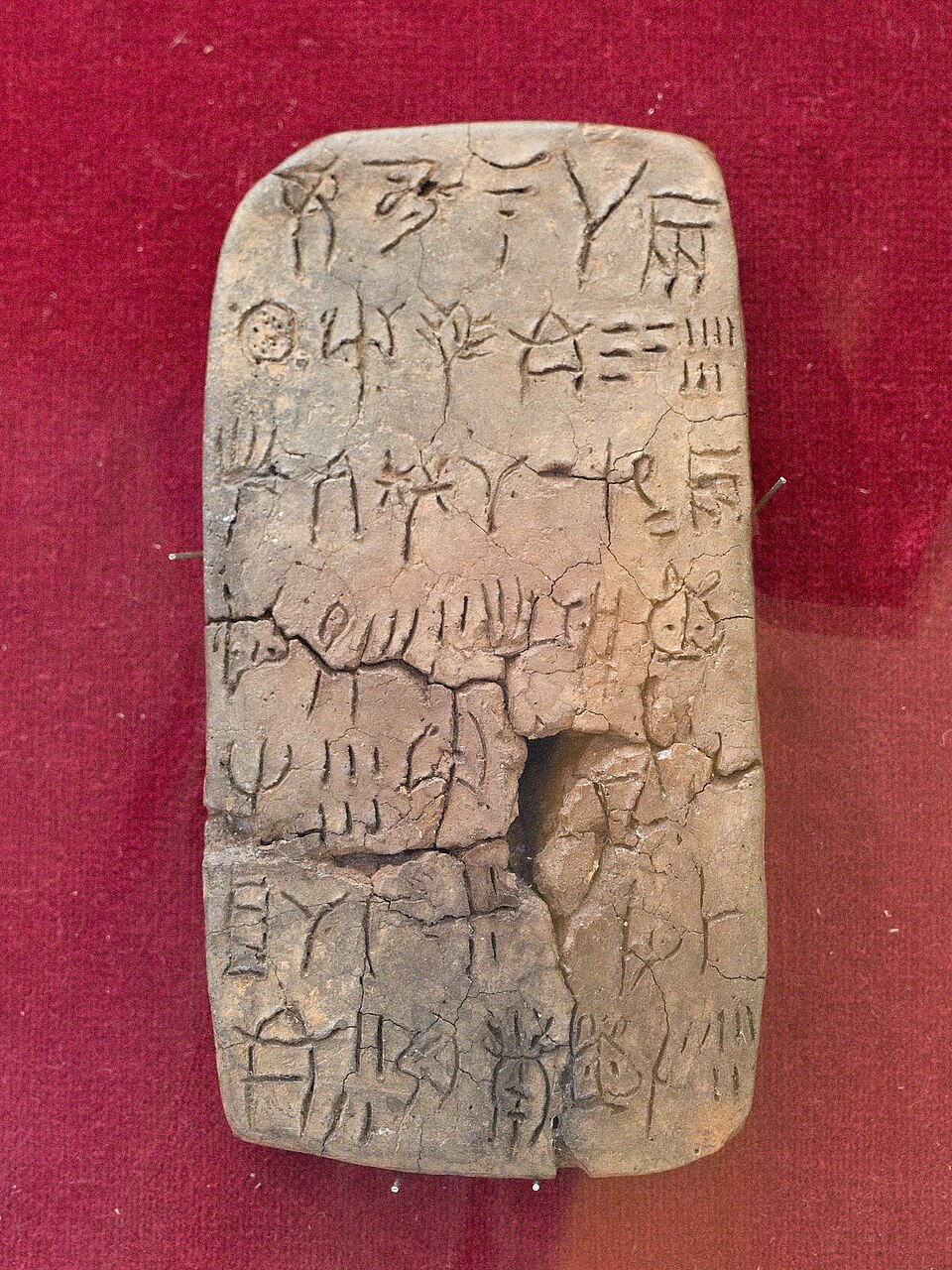
Linear A refuses the same trick. Because the two scripts share so many sign shapes, scholars can assign most Linear A syllabic signs approximate sound values taken from Linear B. The Encyclopaedia Britannica states this plainly: the approximate phonetic values of most syllabic signs used in Linear A are known from Linear B, but the language written in Linear A remains unknown. Read aloud with those borrowed values, the words resolve into no known language. The Mnamon overview warns that such readings are essentially conventional, and only about a dozen syllabograms can be read with real confidence.
A few anchors do hold. Sign groups read with Linear B values sometimes match place names known from later Greek sources, such as pa-i-to for Phaistos, and shared personal names appear in both scripts. These matches support the borrowed sound values for the signs involved, but they do not unlock the language around them. That language, often called Minoan, is unclassified and does not appear to be a close relative of any known language.
The clearest part of the script is its numbers: symbols for 1, 10, 100 and 1,000, plus fraction signs whose values are in several cases uncertain. One word stands out as the most secure reading in the whole corpus: ku-ro, taken to mean “total”, with po-to-ku-ro read as “grand total”. These sign groups appear at the ends of tallied lists, beside numerals equal to the sum of the entries above them. We know what ku-ro means because the arithmetic proves it, not because we know the language.
Lists, receipts and offerings
If we cannot read the tablets, how do we know what they were for? Context does much of the work. Scholars generally agree the main purpose was administration: records of foodstuffs, livestock, pottery and textiles, sometimes with personnel information. The exact nature of individual registrations is uncertain: storeroom movements, distribution in exchange for work, transactions, or perhaps taxes.
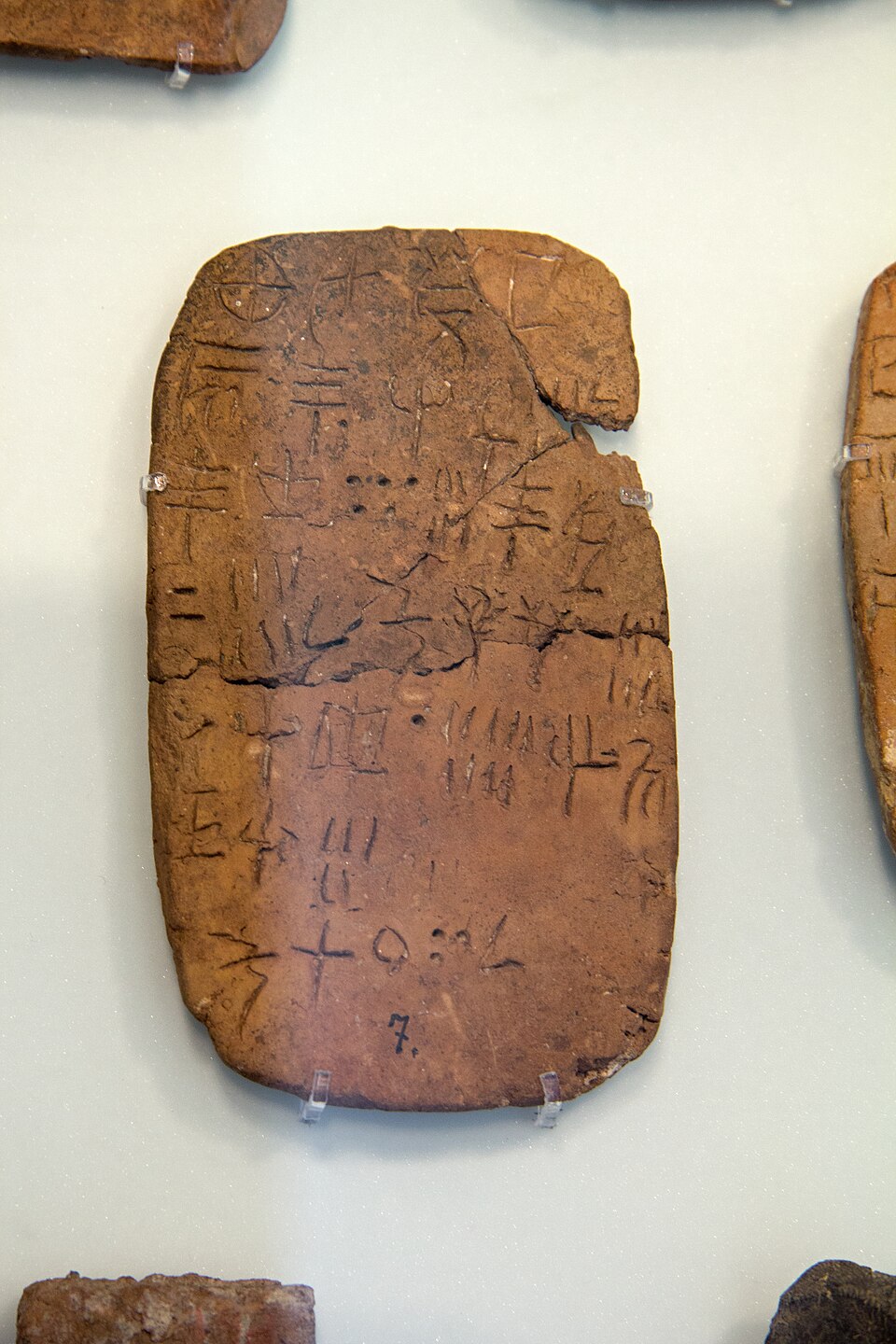
The clay toolkit around the tablets tells the same story. Roundels, small clay disks impressed with seals, may have served as receipts. Other sealings closed jars, sacks and parcels. Matching seal markings across sites point to a connected system of control.
But administration was not the whole story. At sanctuary sites, Linear A appears on stone offering tables, on bronze, silver and gold double axes, and on jewellery, most likely votive offerings naming deities or donors. About 1,000 libation tables have been recovered at 27 sites on Crete, of which 41 carry Linear A inscriptions following a standardised “libation formula”. On pottery, especially the large storage jars called pithoi, inscriptions are typically just three or four signs, and might indicate contents, owner, maker or deity. Nobody knows which.
The surviving clay may be only part of the picture. The curved form of many signs suggests a script suited to brushwork on papyrus or parchment, and some clay sealings bear marks of folded sheets. If longer texts existed on perishable materials, they are gone. The Phaistos Disc, covered in an earlier Diary post, is a different puzzle again: a single unique object with its own set of signs, not a sample of Linear A, and it does not explain it.
We can sound out the words. We cannot understand a single sentence. Linear A is a voice we can hear but cannot follow.
What we know / What we don’t know
What we know:
- Linear A was used by the Minoans on Crete, roughly 1850 to 1450 BCE, as the main script of the palace administration.
- The script is logo-syllabic: signs for syllables plus signs for whole words, plus numbers and fractions. At least 90 characters, by the World History Encyclopedia count; other counts run higher depending on the method.
- About 70 percent of its signs reappear in Linear B, deciphered by Ventris in 1952 as Mycenaean Greek.
- The corpus is small, roughly 1,400 to just over 1,500 inscriptions, mostly short administrative lists.
- The word ku-ro means “total”, proven by arithmetic, and the number signs can be read as values.
- No bilingual inscription has ever been found.
What we don’t know:
- The language behind the script, its relatives, and whether one language or more is recorded.
- What almost any individual tablet says, beyond numbers and a few probable names and totals.
- Whether the borrowed Linear B sound values hold for most signs, or only for the dozen or so checked against shared names.
- What the libation formula says, and what the short pot inscriptions record.
- How much writing on perishable materials did not survive.
- Why the palaces and towns burned around 1450 BCE.
Key takeaways
- Linear A is unreadable not because its signs are unclear, but because the language behind it is unknown and there is no bilingual key.
- Linear B gave scholars the sounds but not the sense: borrowed sound values produce words in no known language.
- The evidence is tiny and lopsided: mostly short lists from a handful of sites, preserved by the fires that destroyed the world that made them.
- The one solid word, ku-ro (“total”), shows what internal evidence can prove, and how little of it there is.
- Decipherment depends on new finds, especially longer texts or a bilingual inscription. The Encyclopedia of Ancient History calls the prospects remote.
A question to argue about
If a bilingual key turned up tomorrow and the tablets proved to be nothing but stock lists and offering tallies, would Linear A still deserve its reputation as one of history’s great mysteries, or is the silence itself the real story? Is an undeciphered script valuable for what it might say, or for what its silence tells us about how much of the past is gone for good?
Discover more from The Time Traveller's Diary
Subscribe to get the latest posts sent to your email.
