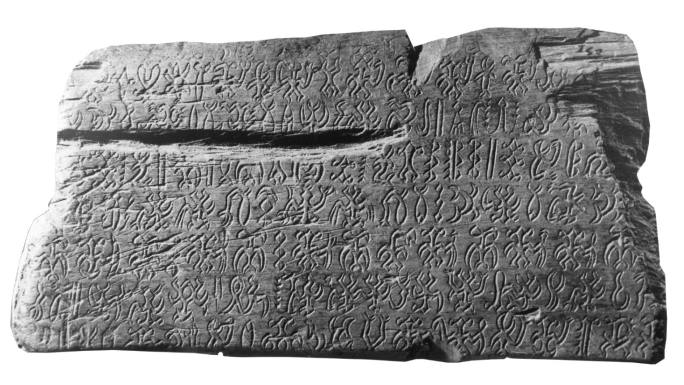
There is a small wooden board, notched along its edges and covered in rows of tiny carved figures, that no one alive can read. It comes from Rapa Nui, known to most of the world as Easter Island. In 2024, scientists radiocarbon dated the wood of that board, Tablet D, and estimated that its tree was felled between 1493 and 1509, more than 200 years before the first Europeans reached Rapa Nui in 1722. If the carving is as old as the wood, the people of Rapa Nui may have independently invented writing, far from any other literate society. That small word, if, is the whole story.
An island at the edge of the map
Rapa Nui sits in the southeastern Pacific, some 3,800 kilometres off the coast of Chile. UNESCO, inscribing Rapa Nui National Park on the World Heritage List, described a society “completely isolated from external cultural influences of any kind for over a millennium.” The island is famous for the moai, monumental stone sculptures. The writing is less famous, and stranger.
The Dutch explorer Jacob Roggeveen sighted the island on Easter Sunday, 5 April 1722, and named it Easter Island for the occasion. Outsiders first noticed the script in 1864, when the missionary Eugène Eyraud described tablets and staffs covered with hieroglyphic characters. Slave raids and epidemics had decimated the population, and production ceased in the late 1860s.
What survives is small enough to count: 27 objects in Ferrara et al., 26 authenticated artefacts at the Australian Museum. None remains on Rapa Nui. Most were salvaged by missionaries in the 1860s and 1870s and sent abroad, and some inscriptions were intentionally destroyed. They are mostly tablets, plus a chieftain’s staff, a tangata manu (birdman) statuette and two reimiro ornaments.
Reading upside down, line after line
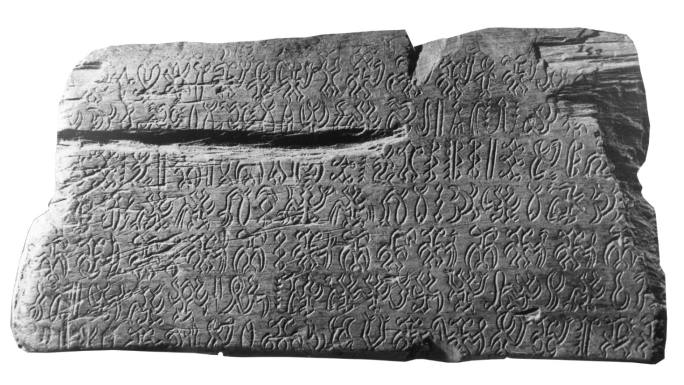
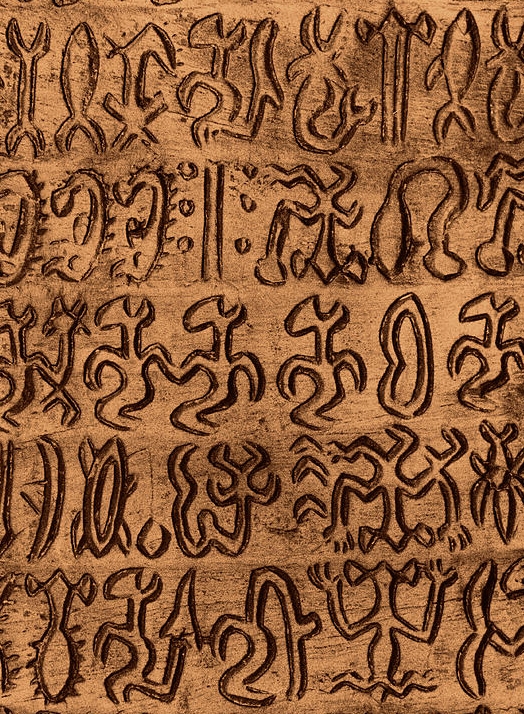
The name points to sound. In the Rapa Nui language, the word behind rongorongo means “to recite, to declaim, to chant out,” and kohau motu mo rongorongo has been rendered as “lines incised for chanting out.” Rapa Nui artist Victor Pakomio, speaking through the Australian Museum, puts it plainly: the boards are talking tablets. The script uses more than 400 distinct glyphs, mostly human and animal forms, in long sequences that Ferrara and colleagues say suggest language notation.
Reading a tablet means turning it. Rongorongo is written in reverse boustrophedon: begin at the bottom left, read left to right, then rotate the tablet 180 degrees for the next line. Every second line is upside down. The signs resemble no known script; their closest parallels are motifs in the island’s rock-carved art. Barthel’s 1958 catalogue gave scholars the letter labels still in use.
A century and a half of study has produced no generally accepted decipherment. Some calendrical information has been identified, and one passage on Tablet C, Mamari, is often described as calendrical, but none of the glyphs can actually be read. “Undeciphered” still needs care: the Australian Museum notes that Rapa Nui oral history has preserved some knowledge of what the tablets held. What was lost was the reading tradition, not Rapa Nui culture or language.
A very old piece of wood
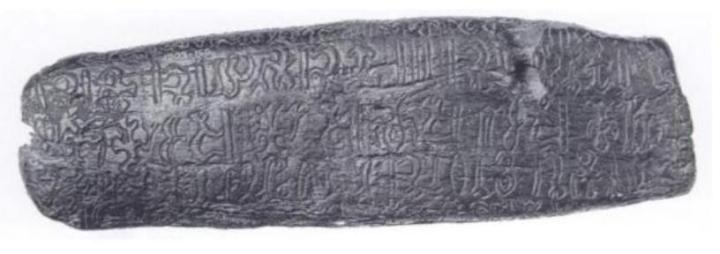
In February 2024, Silvia Ferrara of the University of Bologna and colleagues published new radiocarbon dates in Scientific Reports. They dated four tablets held in Rome, collected by missionaries in 1869 and sent to Tepano Jaussen, Bishop of Tahiti: Tahua, Aruku Kurenga, Mamari and Échancrée (texts A to D). Only two tablets had been dated before.
The team dated cellulose from small wood samples, calibrated the results, and estimated each tree’s felling year, allowing for the distance from each sample to the tree’s outermost ring. Three tablets gave much later dates, in the eighteenth or nineteenth centuries, which the paper summarises as nineteenth century. Tablet D stood apart: a felling estimate of 1493-1509, at 68.3 percent probability. The board, 23.9 by 12.3 centimetres, is Podocarpus wood that never grew on Rapa Nui, later notched and reused as a cord spool.
Now the caveat, stated plainly. The date is the wood, not necessarily the carving. Radiocarbon dating says when the tree grew and was felled. It cannot say when a person cut signs into the board. Ferrara and colleagues say so themselves: wood was scarce, reuse was traditional, and the carving may be newer than the wood. The wood’s age is only a terminus post quem, a date before which the carving cannot have happened. Tablet D’s timber came from elsewhere, and its exact species remains uncertain.
Ferrara still favours a pre-contact origin: storing wood for more than 200 years before using it seems unlikely, she told Live Science. The glyphs look like nothing European. As she put it, quoted in Smithsonian Magazine: “Historically speaking, if you borrow a writing system, then you keep it as close to the original as possible.” In a March 2024 response published on Language Log, Kyle Gorman and Richard Sproat argued that dating the wood does not establish when it was carved, and that rongorongo has yet to be demonstrated to encode language. If rongorongo predates 1722, it would join Mesopotamia, Egypt, China and Mesoamerica as a rare independent invention of writing. Contact may still have stimulated it: in 1770, islanders were observed writing with a quill at a Spanish ceremony.
The caution in one line
“But belief is a different thing than hard data.”
Rafal Wieczorek, a chemist at the University of Warsaw who has studied rongorongo tablets, quoted in Smithsonian Magazine, February 2024. He believes rongorongo was independently invented, and wants every surviving tablet tested.
What we know / What we don’t know
What we know:
- Fewer than 30 inscribed objects survive: 27 in Ferrara et al., 26 authenticated artefacts at the Australian Museum. None remains on Rapa Nui.
- First noticed by outsiders in 1864; production ceased in the late 1860s, after slave raids and epidemics.
- Reverse boustrophedon reading, alternate lines upside down, more than 400 glyph forms resembling no known script.
- Four Rome tablets dated in 2024. Tablet D’s wood: felling estimate 1493-1509. The other three date much later.
- Tablet D’s wood is non-native Podocarpus, later notched and reused as a cord spool.
- No generally accepted decipherment exists, though some calendrical patterns are identified and oral tradition preserves some knowledge.
What we don’t know:
- When the signs were first carved, and whether Tablet D’s carving is anywhere near as old as its wood.
- Whether the script was invented independently, or stimulated by contact, including the quill writing observed in 1770.
- What any tablet says, and whether the system is full writing, proto-writing, or memory aids for chants.
- How Tablet D’s wood reached the island, how long passed before carving, and exactly which Podocarpus species it is.
- What each tablet was for. Oral tradition links the script to genealogies and lunar cycles, but texts cannot yet be matched to topics.
- Whether tablets N, P and S share Tablet D’s old wood, as one suggestion proposes.
Key takeaways
- Rongorongo is a real script on real wood. The mystery is what it says and when it began.
- One tablet, dated wood, with an estimated felling between 1493 and 1509, centuries before 1722.
- Wood dates are starting points, not carving dates. Old wood on an island short of timber demands caution.
- Isolation makes independent invention plausible, but resemblance to nothing else does not prove it.
- Next step: date the remaining tablets, and listen to Rapa Nui knowledge holders too.
A question to argue about
Tablet D gives us an intriguing clue: wood dating to around 1500 and signs unlike European writing. But the age of the wood does not tell us when the signs were carved.
What evidence would convince you that rongorongo was invented before European contact?
Tell us where you stand in the comments.
Discover more from The Time Traveller's Diary
Subscribe to get the latest posts sent to your email.
