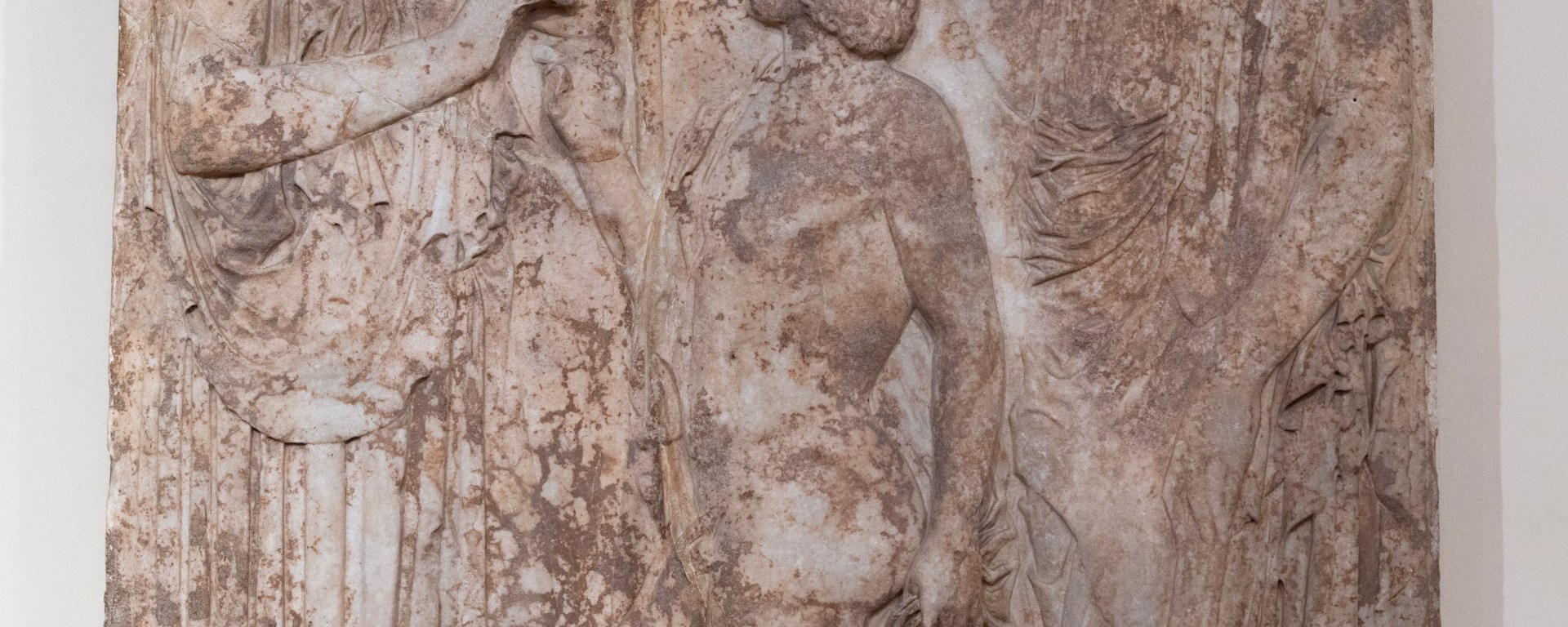
Christmas is full of traditions with histories older and more complicated than the holiday itself. Some developed within Christian Europe, others drew on older seasonal customs, and the date itself has a history that remains debated. So what was the Greek world doing at the same time of year, in the centuries before Christmas existed? The answer is not a Greek version of Saturnalia. Athens had no single great midwinter festival, and Christmas did not borrow directly from Greek festivals at all. What Athens did have, in the month the Greeks called Poseideon, was stranger and more interesting: a women’s harvest festival held in the middle of winter, and a wine festival that turned country villages into theatres.
The month of Poseideon
The Athenian year was lunisolar. Twelve lunar months amounted to about 354 or 355 days, so an additional month was inserted periodically to keep the calendar broadly aligned with the solar year. A second Poseideon was commonly used, although the exact system of intercalation in historical Athens is debated. Poseideon was the sixth month, falling roughly in December and January, and it was named for Poseidon.
Two festivals particularly associated with Poseideon were the Haloa at Eleusis and the Rural Dionysia in the country demes of Attica. Neither was a festival of light. Both were about the food and drink that would carry people through the winter: grain and wine.
The Haloa: a harvest festival in winter
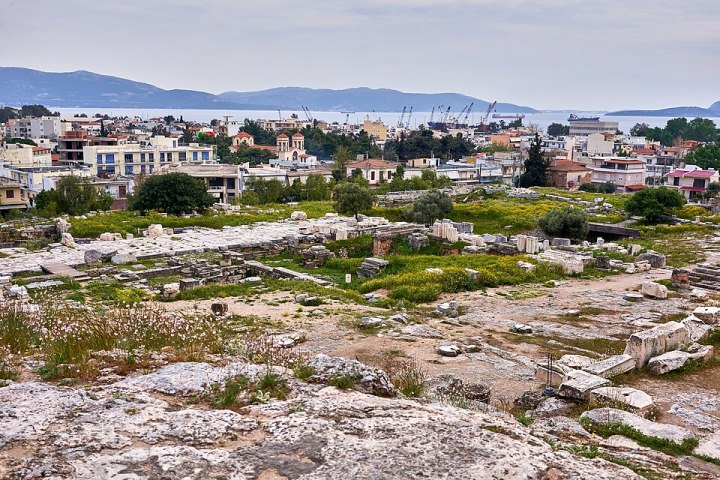
The Haloa was an Attic festival held every year in Poseideon, at Eleusis. It honoured Demeter and Dionysus, with Poseidon Phytalmios also associated with the festival in some accounts. Its name has traditionally been connected with hálōs, meaning a threshing floor, although the etymology is disputed. A recent Oxford reference favours a connection with worked land or a garden plot instead. The festival was centred on Eleusis, where ancient tradition associated a threshing floor with Triptolemus. Some later accounts also connect it with the bringing of first-fruits from Athens to Eleusis.
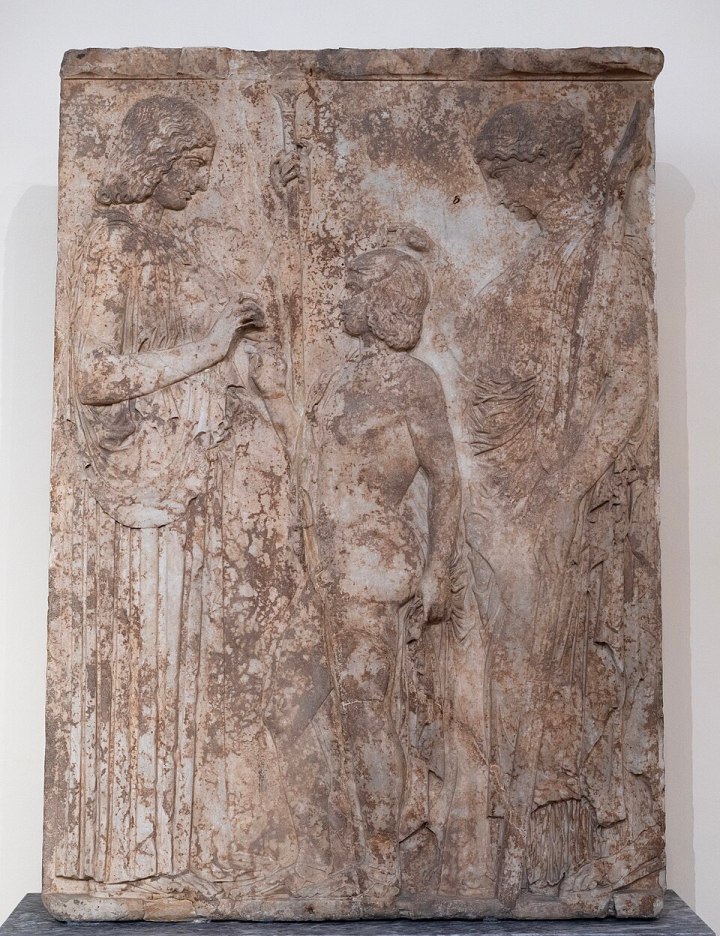
A threshing festival in the middle of winter is an odd thing. Jane Ellen Harrison argued that Dionysus pulled its date into winter.
The festival was conducted largely by women, and its more private rites appear to have excluded men. The surviving accounts do not establish that men were excluded from every part of the celebration. A priestess performed the sacrifice, with no blood sacrifice. The feast was “gentle” food: cereals, fish, and cakes shaped like the symbols of sex. The pomegranate was among the foods prohibited in the festival’s reported ritual feast.
What happened in the secret part of the festival is poorly documented. The most detailed surviving account of the Haloa comes from a scholion on Lucian’s Dialogues of the Courtesans. It describes women’s restricted rites, sexual symbolism, obscene jokes, food prohibitions, and cakes shaped like sexual symbols. A different scholion on Lucian describes pits, pigs, snakes, and dough models of genitalia in connection with the Thesmophoria and related women’s rites. These accounts should not be confused. The Haloa is said to have included Mysteries of Demeter, Persephone, and Dionysus.
The Rural Dionysia: wine, processions, and plays
If the Haloa belonged to the women of Eleusis, the Rural Dionysia belonged to the countryside. It was associated with the cultivation of vines and the worship of Dionysus. Its precise origins are uncertain, although the festival may be very ancient. It was held in winter, in Poseideon. Each deme chose its own day, and the demarch organized it at the deme’s expense.
A central feature was the pompe, or procession, which could include phalloi, basket-bearing girls, and containers of wine. Sacrifices and contests also formed part of the celebrations. The precise programme varied between demes.
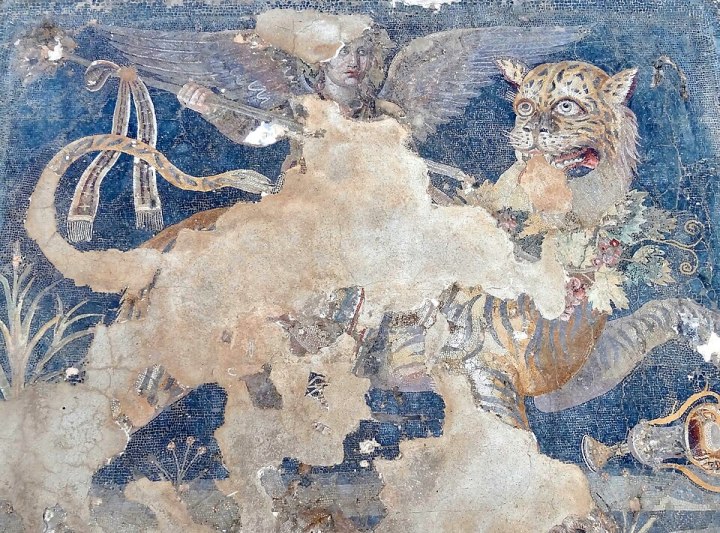
Some of the larger demes, including Piraeus, Eleusis, Thorikos, and Ikarion, had theatres or theatrical spaces. Dramatic performances took place in a number of demes, and some productions may have been revivals of earlier plays performed at the City Dionysia. In The Acharnians, Aristophanes depicts Dicaeopolis celebrating a private Rural Dionysia, complete with a comic phallic procession.
Smith’s Dictionary records that slaves enjoyed considerable freedom during the Rural Dionysia. Work stopped, the normal order loosened, and the village celebrated together. The Rural Dionysia was one of four festivals of Dionysus in the Attic year, followed by the Lenaia, the Anthesteria, and the City Dionysia. Plutarch wrote that the season sacred to Dionysus was the months nearest the shortest day.
The longest night: Helios and the return of light
So what about the solstice itself? The Athenians tracked the solar year, and their calendar was built to keep the festivals in step with the seasons. But the sources consulted for this post do not establish an ancient Greek festival specifically celebrating the winter solstice or the return of the sun.
One of the best-known Greek mythological explanations of the seasons is a story about grief. In the Homeric Hymn to Demeter, Persephone is carried off by Hades to the underworld, and Demeter’s mourning stops the earth from bearing fruit. It is Helios who tells Demeter the truth about what happened to her daughter. Persephone spends part of each year below, because she ate a pomegranate seed, and part above. Persephone’s return brings the possibility of renewed growth; her absence leaves the earth barren. In this telling, winter becomes the story of a mother grieving for her daughter.
There is one late antique coda, and it comes not from Classical Greece but from Alexandria in Egypt. Epiphanius of Salamis records in his Panarion that the winter solstice was celebrated on December 25 in Alexandria as the Kikellia. On the night of January 5 to 6, Alexandrians celebrated a rite in which Kore, identified as the Virgin, was said to give birth to Aion. At the Koreion, an idol of the child god was brought out of an underground shrine at dawn and carried around the temple seven times. The people answered: “today at this hour Kore, the virgin, gave birth to Aion.”
Epiphanius was writing against the people who kept this rite, so his accuracy is debated. The Kikellia and the birth of Aion belong to late antique Egypt, not to the Greece of the Haloa and the Rural Dionysia.
What Christmas did and did not take from Greece
So what did Christmas take from all this? The honest answer is that there is no good evidence that Christmas borrowed directly from the Greek festivals discussed here. The better-known proposed connections with older midwinter celebrations involve Roman traditions.
Rome had its own midwinter festival. The Saturnalia was anchored on December 17. Its celebrations could extend for several days, commonly through December 23, with feasting, gift-giving, gambling, and temporary reversals of social convention. But it was not held on December 25, it was not a solstice celebration, and it did not invoke the imagery of light. As National Geographic puts it, “As the basis for Christmas, Saturnalia is an imperfect candidate.”
The December 25 date has its own tangled history. December 25 carries an entry for the birthday of the Unconquered One in the calendar section of the Chronography of 354, generally interpreted as referring to the Unconquered Sun. A separate section, the Depositio Martyrum, records the birth of Jesus on the same date. The Christian entry is generally understood to reflect a Roman observance dating to 336. The document therefore provides evidence for both commemorations, but does not establish which came first. Aurelian re-established and promoted the cult of Sol Invictus in 274, but the December 25 date is not documented as his doing. Two explanations are still held, and neither has won: the church fixed the date to rival the pagan feast of the sun, or the date was worked out from the calendar. A passage in the Commentary on Daniel attributed to Hippolytus of Rome has also been interpreted as placing Christ’s birth on December 25. Its textual transmission and interpretation have been disputed, and it should not be treated as uncontested evidence for an early celebration of Christmas on that date.
The Kronia is the Greek festival people reach for here, and it is the wrong one. It most resembled the Saturnalia: it honoured Kronos, and slaves and free citizens dined together while masters served their slaves. But it fell on the twelfth day of Hekatombaion, roughly in late July or early August. It was a midsummer harvest festival, not a winter one.
So the line from Greece to Christmas does not run straight. The Roman half of the story came first in this set. What Athens offers is a midwinter that was not about light at all, but about grain in the storehouse, wine in the jar, and a mother waiting for her daughter to come home.
He possessed himself of the festivals of Demeter, took over her threshing-floor and compelled the anomaly of a winter threshing festival.
Jane Ellen Harrison, Prolegomena to the Study of Greek Religion, third edition (1922), p. 147
What we know / What we don’t know
What we know
- Poseideon, roughly December to January, was the sixth month of the lunisolar Athenian year, named for Poseidon.
- The Haloa was an Eleusinian festival associated with Poseideon, honouring Demeter and Dionysus. It was largely conducted by women, although participation in every part of the celebration is not established.
- The reported Haloa rites included bloodless offerings and a feast with particular food prohibitions, including the pomegranate.
- The Rural Dionysia was celebrated on different days in the demes of Attica during Poseideon. Processions, sacrifices, contests, and theatrical performances are attested, although the programme varied.
- Smith’s Dictionary reports that slaves enjoyed considerable freedom during the Rural Dionysia.
- The Kronia fell on the 12th day of Hekatombaion, in midsummer, not winter.
- Saturnalia was anchored on December 17, with celebrations commonly extending through December 23, not on December 25, and was not a solstice celebration.
- The Chronography of 354 records December 25 for both the Unconquered Sun and the birth of Jesus, with the Christian entry generally reflecting an observance dating to 336.
What we don’t know
- The exact date of the Haloa. The 26th of Poseideon is a modern reconstruction, not a securely attested fact.
- What actually happened in the Haloa’s secret rites. The most detailed surviving account is a scholion on Lucian’s Dialogues of the Courtesans. The pits, snakes, pigs and dough models of genitalia in a different Lucian scholion describe the Thesmophoria and related rites, not the Haloa.
- Whether men were excluded from the whole Haloa or only from its secret rites. The sources say both.
- Whether the askoliasmos game belonged to the Rural Dionysia. Ancient sources connect it, and modern scholars are unsure.
- Which came first on December 25, the birthday of Sol Invictus or the birthday of Jesus. The Chronography of 354 first attests both.
- How accurately Epiphanius describes the Alexandrian Kikellia and the birth of Aion. The rite is late antique and Egyptian, not Classical Greek.
Key takeaways
- Athens had no single Saturnalia-like midwinter festival. Its Poseideon festivals were about grain and wine, not light.
- The Haloa was a predominantly women’s festival held in winter, whose unusual timing prompted Jane Ellen Harrison’s interpretation of Dionysus’s influence.
- The Rural Dionysia brought processions and plays to the country demes.
- One important Greek mythological explanation of winter centred on Demeter’s grief and Persephone’s return.
- There is no good evidence of direct borrowing from the Greek festivals discussed here. The better-known proposed connections involve Roman traditions.
- The Kronia, the Greek festival most like Saturnalia, was a midsummer harvest festival.
And now it’s your turn
The Greeks met the darkest days of the year with grain and wine rather than with light. Look at your own December traditions: how much is about the season itself, and how much is borrowed from somewhere else?
Discover more from The Time Traveller's Diary
Subscribe to get the latest posts sent to your email.
