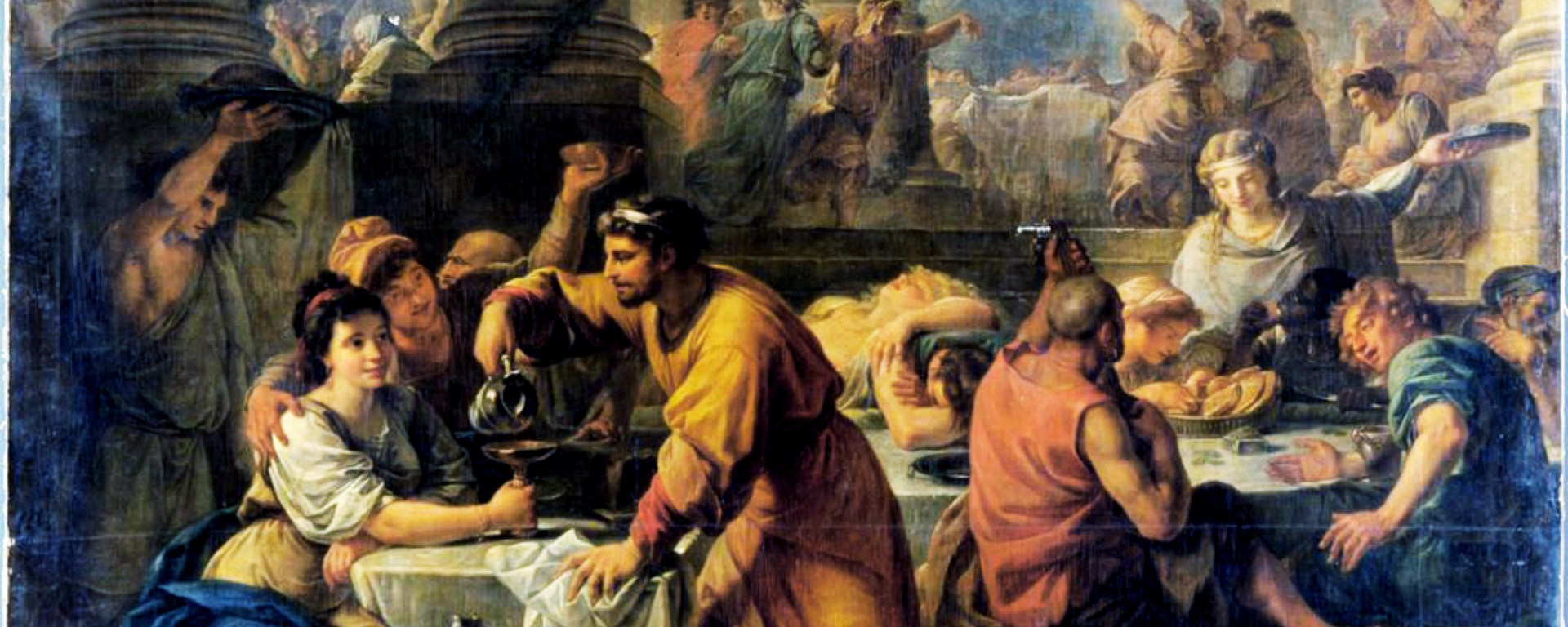
Ask most people where Christmas came from and Saturnalia is the answer they give: a Roman winter festival of feasting and gift-giving, held just before December 25. The real story is messier, and more interesting. Saturnalia was one of the most celebrated occasions in the Roman year, a week when ordinary social rules were relaxed and the usual order of things was turned upside down. But it did not fall on December 25, it was not a festival of light, and early Christian writers discussing the date of Christmas do not connect it to Saturnalia. This is the Roman half of the story. The Greek half comes next.
Saturn, god of seed and sowing
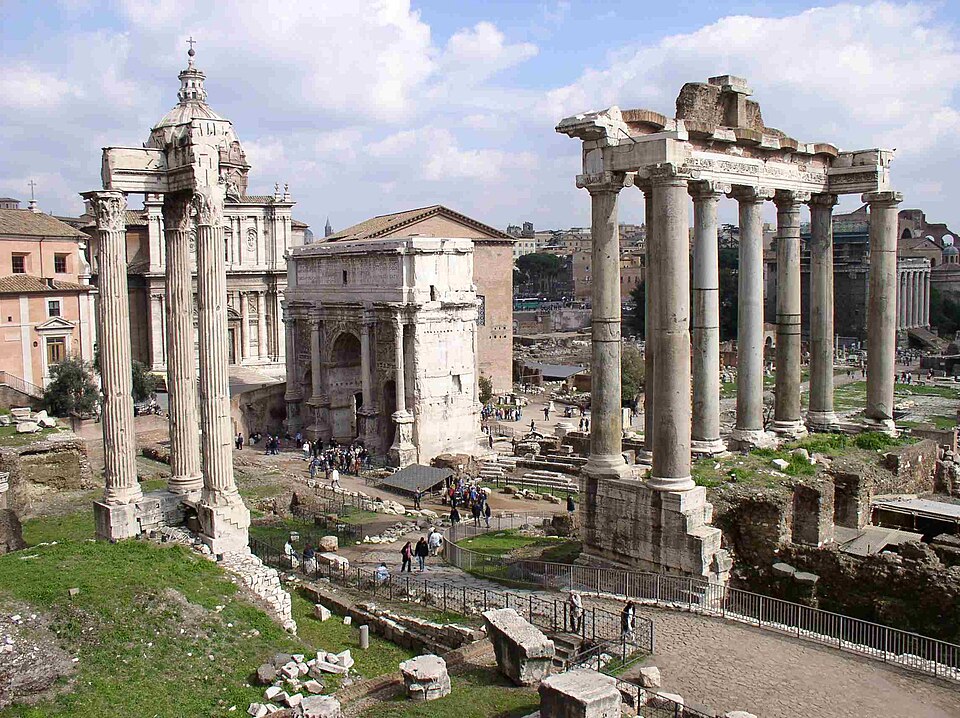
Saturn was a god of the fields. The Romans linked Saturn’s name to satus, the Latin word associated with seed and sowing. He was said to have reigned over Italy in a Golden Age, when the earth gave its bounty without labour, slavery did not exist, and property was held in common. The Romans identified him with the Greek Kronos, whose own festival, the Kronia, fell in midsummer.
His temple stood at the foot of the Capitoline Hill, in the Roman Forum, and it was among the oldest cult sites in Rome. One ancient tradition dated its dedication to 497 BC, and the Saturnalia itself was celebrated as the anniversary of that dedication. The temple also housed the state treasury, and Saturn was a god of plenty and of hidden wealth.
December 17: the temple rite
Saturnalia was anchored on December 17. In the oldest Roman calendar the festival lasted a single day, the fourteenth day before the Kalends of January. When Julius Caesar reformed the calendar in 45 BC and added two days to December, the festival’s position in the calendar was reckoned differently. Macrobius later explained that the confusion between the old and new reckoning helped the celebrations spread beyond their original single day. By the first century BC the private celebrations had spread to seven days, from December 17 to 23.
The emperors tried to rein it in. Augustus limited the official holiday to three days, so the civil courts would not have to close any longer than necessary. Caligula extended it to five, and Claudius restored the fifth day after it had been dropped. But the people kept the whole week, with the festivities extending into the Sigillaria, a market associated with the small figurines exchanged as gifts. December 19 belonged to the Opalia, a feast for Ops, Saturn’s consort, who personified abundance and the fruits of the earth.
The day opened at the Temple of Saturn. The ivory statue of the god normally stood with its feet bound in woollen strips. On the Saturnalia the bonds were loosened, to symbolize the liberation of the god. The sacrifice was offered in the Greek rite, with the priest’s head uncovered, because Saturn was identified with Kronos. After the sacrifice came a public banquet, accompanied by a lectisternium, in which an image of the god was placed on a couch as if he were present at the feast. Livy dates the introduction of the lectisternium to 217 BC, after Rome’s defeat at Lake Trasimene and the consultation of the Sibylline Books. The festival was thereafter celebrated in the Greek manner. Then the celebrants spilled into the streets shouting Io, Saturnalia, the festival’s familiar greeting.
The world turned upside down
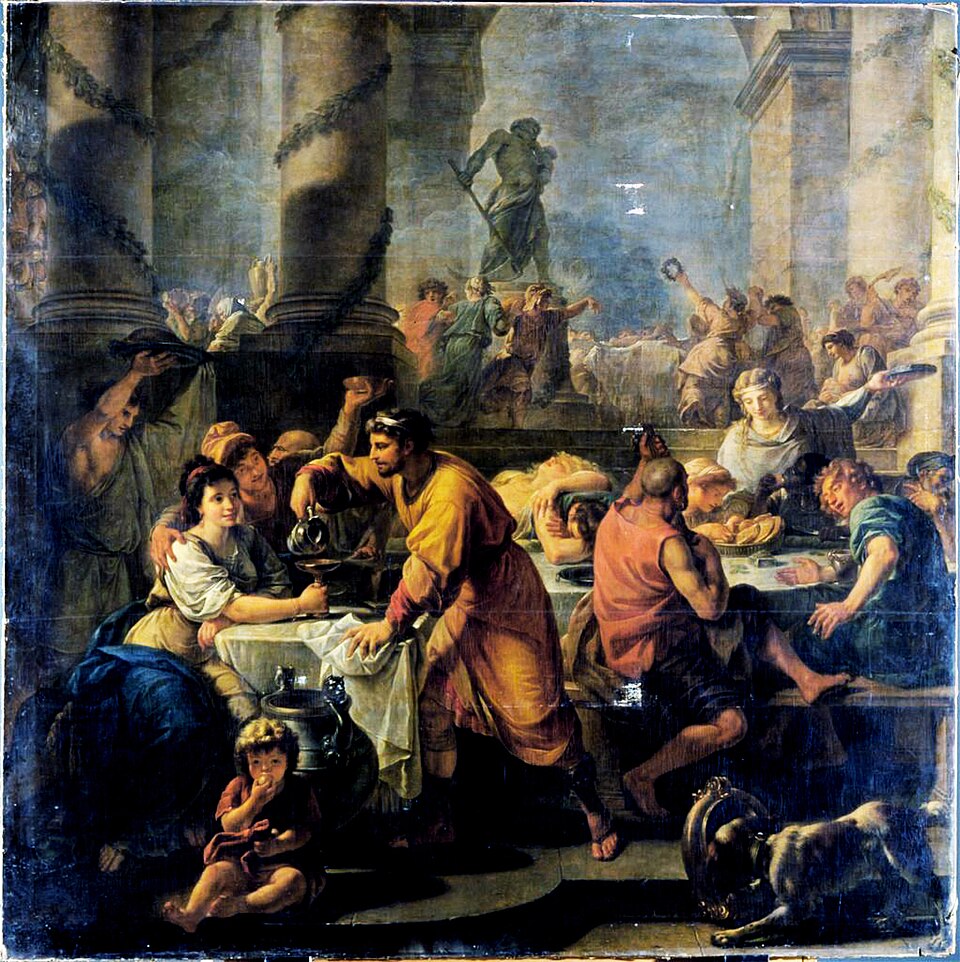
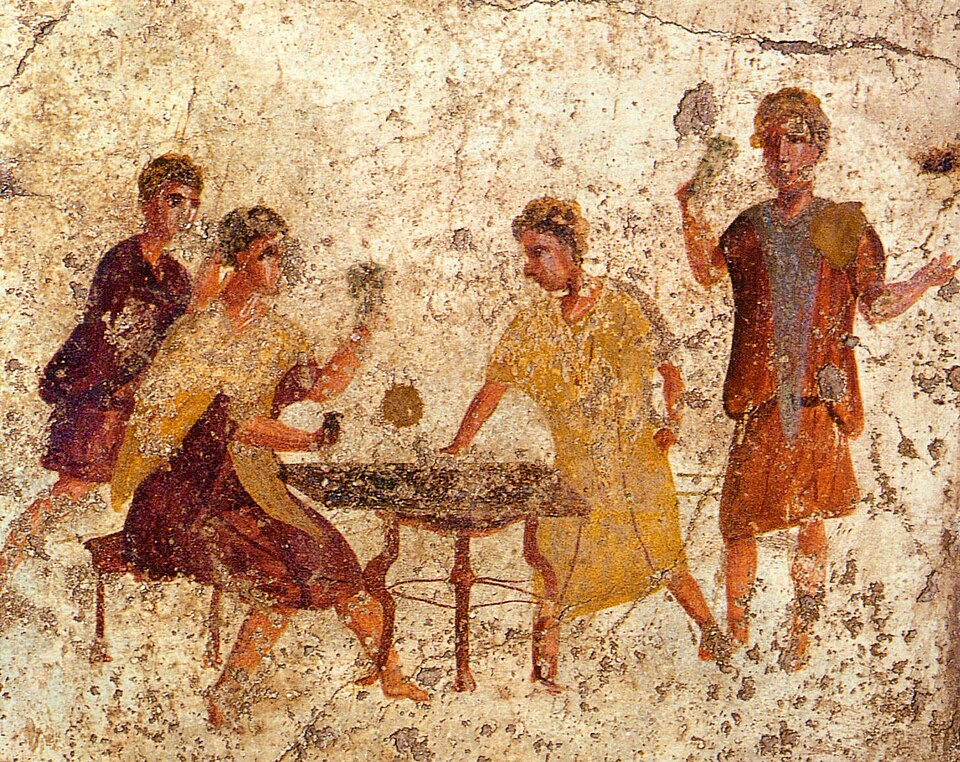
For the rest of the week, many of the usual rules were relaxed. Gambling, normally forbidden or at least frowned upon, was allowed in public, and slaves were allowed to throw dice with their masters. The toga, the mark of the Roman citizen, was set aside for the synthesis, brightly coloured dinner clothes that were otherwise thought unsuitable for daytime. The pileus, the felt cap associated with freed slaves, was also worn during the festival as a symbol of temporary freedom, blurring the distinction between free and enslaved people.
Within the household, a Saturnalicius princeps, or Lord of Misrule, could be chosen by lot to give orders that the other guests were expected to obey. The young Nero is recorded as playing the role and ordering his step-brother Britannicus to sing. The figure does not appear in accounts from the Republican period, and it may have grown up as a joke on the new imperial title of princeps, the first man.
For a few days, the usual boundaries between masters and slaves were temporarily blurred. Ancient sources differ on the exact arrangement: some say masters and slaves dined together, others that the slaves feasted first, and others that the masters served the food. Despite their differences, the accounts preserve a picture of a festival in which the usual social boundaries were temporarily challenged. Horace called it December liberty, and Seneca complained that the whole mob has let itself go in pleasures. The poet Catullus called Saturnalia the best of days. Everyone knew the levelling was temporary. When December ended, the order came back.
Gifts: candles and small clay gods
Gift-giving was part of Saturnalia, with candles and small figurines among the familiar offerings. These figurines, called sigillaria, were made of wax or pottery and sold at the market of the same name. Martial wrote two collections of short poems, the Xenia and the Apophoreta, to accompany gifts. His lists range from writing tablets, dice and lamps to pigs, sausages, parrots and even books of bad poetry. The presents varied considerably in value, from inexpensive tokens to more elaborate offerings. What mattered was not simply the object itself, but the act of giving. Children received toys and small figurines, while gifts and financial assistance also formed part of the relationships between Roman patrons and their clients.
Some ancient and modern writers have suggested that the candles signified the returning light after the solstice. It is a tempting reading, and it is not proven. Macrobius also records an ancient explanation that candles replaced human sacrificial offerings to Saturn, although he presents competing explanations for the custom.
What Saturnalia was not
So what does Saturnalia have to do with Christmas? Less than the usual story claims. As National Geographic puts it, “As the basis for Christmas, Saturnalia is an imperfect candidate.” Saturnalia did not fall on December 25. Even in its longest form it ended on December 23. It was not a solstice celebration, and so it did not invoke imagery of light, as Christmas does. Its themes were agricultural renewal and the Golden Age of Saturn, not the rebirth of the sun. The winter solstice in the Julian calendar fell on December 25, a few days after Saturnalia had ended.
December 25 has a separate and equally complicated history. December 25 carries an entry for the birthday of the Unconquered One in the calendar section of the Chronography of 354, generally interpreted as referring to the Unconquered Sun. A separate section, the Depositio Martyrum, records the birth of Jesus on the same date. The Christian list is generally understood to preserve a Roman observance dating back to around 336. Aurelian re-established and promoted the cult of Sol Invictus in 274, but the December 25 date is not documented as his doing. A passage in the Commentary on Daniel attributed to Hippolytus of Rome has been interpreted as placing Christ’s birth on December 25. Its textual transmission and interpretation have been disputed, and it should not be treated as uncontested evidence for an early celebration of Christmas on that date.
Two main explanations continue to be debated. One connects the date to the celebration of the sun. The other suggests that Christians arrived at it through their own chronological calculations. Neither explanation has been conclusively established. What is striking is that when early Christian writers discuss the meaning of December 25, they do not mention Saturnalia at all. Augustine told his congregation to hold the day sacred “not as unbelievers do because of the material sun, but because of Him who made the sun.” Saturnalia continued to be recorded in later Roman calendars. In AD 448, December 17 was still marked in the calendar of Polemius Silvius, but its entry described it simply as feriae servorum, the festival of the slaves. Later winter celebrations known as the Brumalia have also been associated with the older Roman winter festivals, although their precise relationship is more complicated.
Saturnalia gives us the Roman side of the ancient midwinter story. Next comes the Greek side: the Haloa, the Rural Dionysia, and the story of a mother grieving for her daughter.
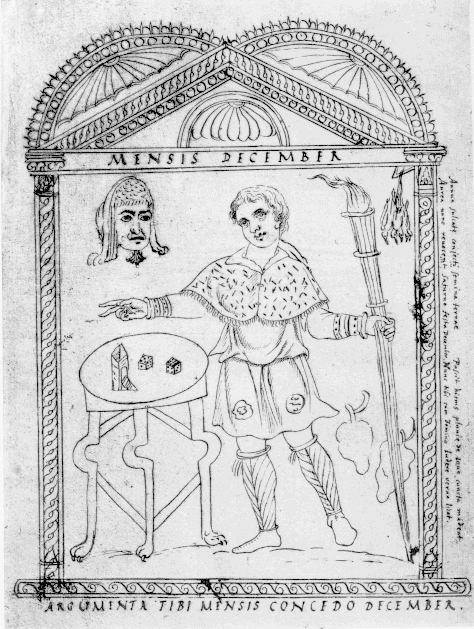
During My week the serious is barred; no business allowed. Drinking, noise and games and dice, appointing of kings and feasting of slaves, singing naked, clapping of frenzied hands, an occasional ducking of corked faces in icy water, such are the functions over which I preside.
Lucian, Saturnalia, the god Saturn speaking
What we know / What we don’t know
What we know
- Saturnalia was anchored on December 17. In the oldest calendar it lasted a single day; by the first century BC the private celebrations had spread to seven days, from December 17 to 23.
- Augustus limited the official holiday to three days, Caligula extended it to five, and Claudius restored the fifth day. The people kept the whole week.
- The Temple of Saturn stood in the Roman Forum. Its ivory statue normally had its feet bound in woollen strips, and the bonds were loosened on the Saturnalia. The sacrifice was offered in the Greek rite, with the priest’s head uncovered.
- The public banquet and the lectisternium were introduced in 217 BC, after the defeat at Lake Trasimene, when the Sibylline Books were consulted.
- Gambling was allowed in public during the festival, and slaves were allowed to throw dice with their masters.
- The pileus, the felt cap associated with freed slaves, was also worn during the festival as a symbol of temporary freedom, and the toga was set aside for the synthesis, brightly coloured dinner clothes.
- The Saturnalicius princeps, a Lord of Misrule chosen by lot, appears in imperial sources. The young Nero is recorded as playing the role.
- The typical gifts were wax candles and small sigillaria figurines.
- Saturnalia did not fall on December 25 and was not a solstice celebration.
- The Chronography of 354 records December 25 for both the Unconquered Sun and the birth of Jesus, with the Christian list generally understood to preserve a Roman observance dating back to around 336.
What we don’t know
- Whether the Saturnalicius princeps was a standard feature of every Saturnalia, or only an imperial-period household custom. The figure does not appear in accounts from the Republican period.
- The exact day of the gift-giving. Some sources place the Sigillaria market and the exchange of gifts on December 19, others on the closing day of the festival.
- How far the role reversal went in practice. Sources differ on whether masters served slaves, dined with them, or let the slaves feast first.
- Whether the wax candles signified the returning light after the solstice. Ancient and modern writers have suggested it, but it is not proven.
- Which came first on December 25, the birthday of Sol Invictus or the birthday of Jesus. The Chronography of 354 first attests both.
- How much of Christmas, if anything, descends directly from Saturnalia. Influence is proposed, not proven.
Key takeaways
- Saturnalia was Rome’s great midwinter party, anchored on December 17 and running to December 23 at its longest.
- It honoured Saturn, god of sowing, and remembered his Golden Age, when no one was a slave and nothing was privately owned.
- For a few days the social order was turned upside down, and then it was put back.
- The gifts ranged from inexpensive tokens to more elaborate presents, and the exchange itself mattered as much as the object.
- Saturnalia was not the origin of Christmas Day. Its dates and traditions do not establish that connection.
- The story continues with the Greek festivals of midwinter.
And now it’s your turn
The Romans set aside a week when masters served slaves, dice were allowed, and the smallest gift counted most. What would your December look like if the rules were suspended for a week?
Discover more from The Time Traveller's Diary
Subscribe to get the latest posts sent to your email.
