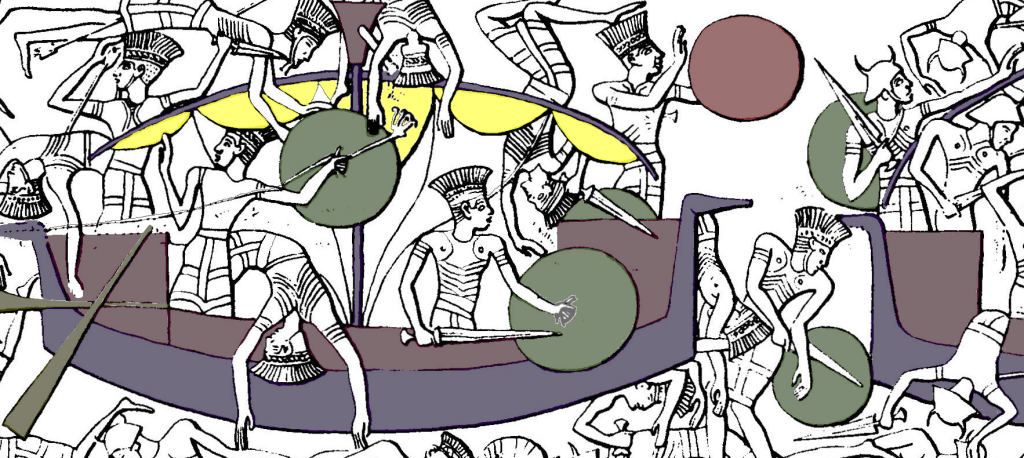
Around 1200 BCE, the ancient world began to fall apart.
Great cities burned. Empires weakened. Trade routes broke down. Writing systems disappeared in some regions. Powerful kingdoms that had seemed permanent suddenly became fragile.
And somewhere in the chaos, ancient records mention a terrifying group of outsiders arriving by land and sea.
They are known today as the Sea Peoples.
But who were they? Raiders? Refugees? Invaders? Victims of climate disaster? Or just one part of a much bigger collapse?
The truth is still debated, and that is what makes this mystery so fascinating.
The World Before the Collapse
Before the disaster, the Late Bronze Age world was deeply connected.
Egypt, the Hittite Empire, Mycenaean Greece, Cyprus, Canaan, and powerful city-states like Ugarit were linked by trade, diplomacy, royal marriages, and shared resources.
Bronze itself depended on long-distance trade. Copper and tin had to move across huge distances. If those routes failed, weapons, tools, and economies could fail with them.
In other words, the ancient world was more global than we often imagine.
And like our modern world, that interconnectedness made it powerful, but also vulnerable.
Enter…the Sea Peoples
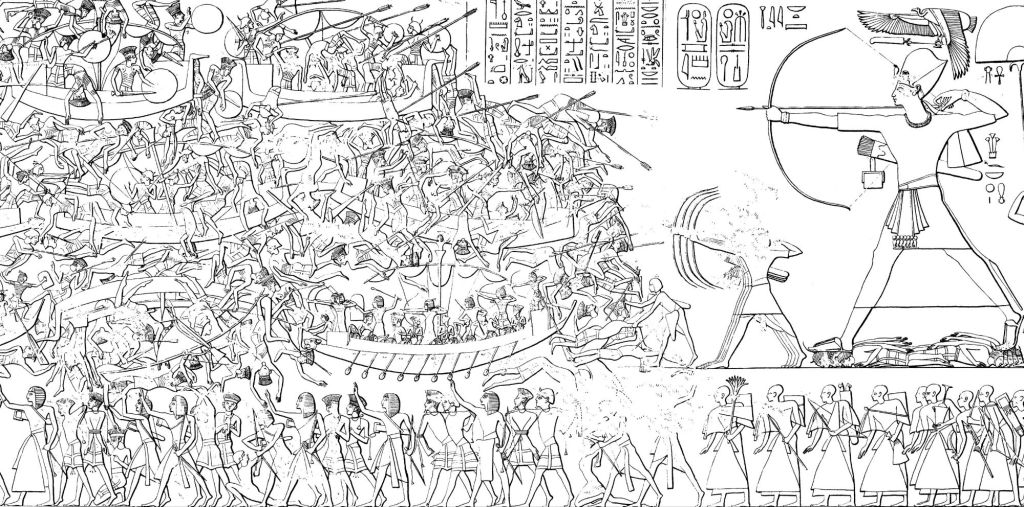
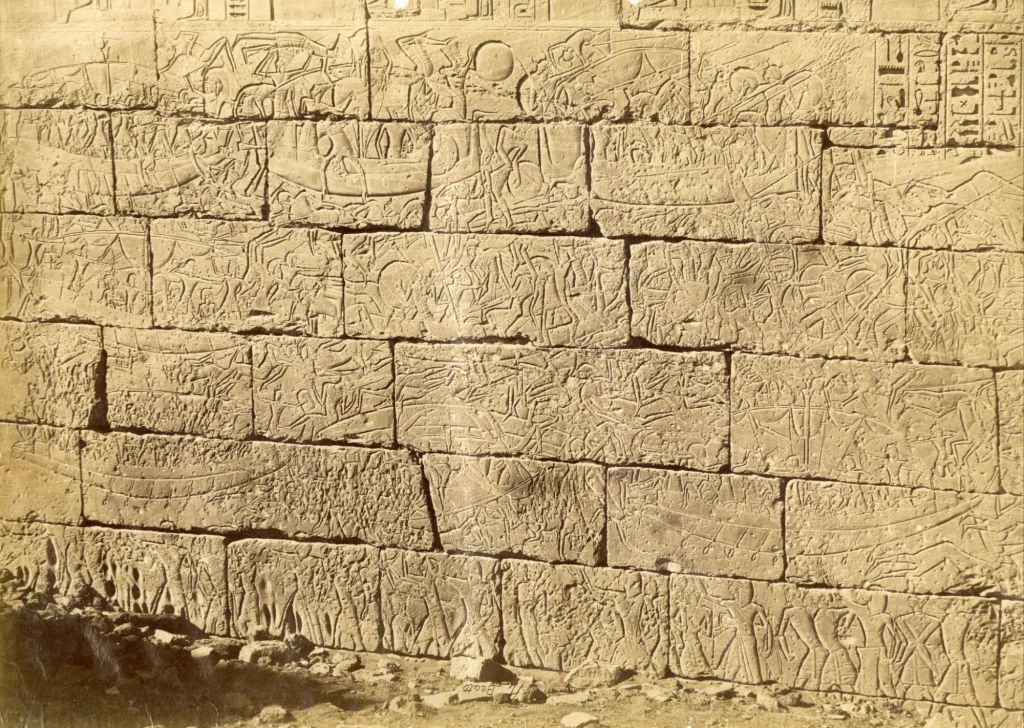
Egyptian records from the reign of Ramesses III describe groups attacking by land and sea. The names listed include peoples such as the Peleset, Tjeker, Sherden, Shekelesh, and Denyen.
To the Egyptians, they were dangerous outsiders. They arrived with families, carts, ships, warriors, and weapons. This detail matters, because it suggests they may not have been only raiders looking for treasure. Some may have been entire displaced communities searching for somewhere to survive.
That changes the story.
Instead of imagining a single army of mysterious pirates, we may be looking at a wave of migration, conflict, desperation, and collapse all happening at once.
Did They Destroy the Bronze Age World?
For a long time, historians blamed the Sea Peoples for the Bronze Age Collapse.
It was a simple story: mysterious invaders arrived, destroyed cities, and brought down civilizations.
But history is rarely that simple.
Today, many researchers believe the collapse was caused by several pressures happening together:
- Drought and climate stress
- Famine and crop failure
- Earthquakes
- Internal rebellion
- Broken trade networks
- Weakening empires
- War and migration
- Attacks from groups like the Sea Peoples
The Sea Peoples may have been one cause of the collapse, but they may also have been a symptom of it.
That is the part worth sitting with.
Maybe they did not appear out of nowhere to destroy a stable world. Maybe the world was already cracking, and they were among the people forced to move when everything began to fail.
The Fall of Cities
One of the most haunting examples comes from Ugarit, a wealthy city on the coast of modern Syria.
Archaeologists have found letters suggesting the city was under threat and desperately asking for help.
But help never came…
Ugarit was destroyed and never fully recovered.
Across the eastern Mediterranean, similar patterns appeared. Palaces burned. Administrative systems collapsed. Trade slowed or stopped. Some societies survived in weakened form, while others disappeared from the historical record.
Egypt managed to repel the Sea Peoples, at least according to its own inscriptions, but even Egypt emerged diminished. Victory did not restore the old world.
The Bronze Age was ending.
Why This Mystery Still Matters
The Sea Peoples fascinate us because they sit at the center of one of history’s biggest questions:
How does a civilization collapse?
Was it invasion? Climate? Bad leadership? Economic fragility? A chain reaction?
The uncomfortable answer may be: all of the above.
That is what makes this ancient mystery feel strangely modern. We also live in a connected world shaped by trade, climate, migration, political tension, and fragile supply chains. The Bronze Age Collapse reminds us that powerful systems can look stable, right up until they are not.
However, it is important to remember that the ancient world did not fall because of one bad day. It fell because too many pressures built up at once.
So Who Were the Sea Peoples?
The honest answer is that we still do not fully know.
They may have come from different places. Some may have been warriors. Some may have been refugees. Some may have been opportunists. Some may have been families fleeing disaster.
They were not necessarily one people, one nation, or one army.
They were a shadow moving across a collapsing world, remembered mostly by the civilizations that feared them.
And perhaps that is why they remain so compelling. They are not just villains in someone else’s story. They may have been survivors of the same disaster they helped spread.
Final Thought
The mystery of the Sea Peoples is not just about who they were. It is about what happens when the systems people depend on begin to break.
Their story reminds us that history is rarely made by one cause, one battle, or one group. Collapse is usually more complicated than that. It builds quietly, through pressure, weakness, fear, and movement, until suddenly the world changes.
And now it’s your turn.
Were the Sea Peoples destroyers, refugees, or both? Do you think civilizations collapse from outside attacks, or from weaknesses within?
Share your thoughts in the comments, and follow The Time Traveller’s Diary for more strange discoveries, historical anomalies, and forgotten clues from the past.
- The Code of Hammurabi: Why humans have always wanted justice written down
- Mansa Musa: The king so rich he put Mali on the map
- The Nazca Lines: Ancient Art, Sacred Paths, or Messages to the Sky?
- The Rosetta Stone: The ancient key that let us hear Egypt again
Discover more from The Time Traveller's Diary
Subscribe to get the latest posts sent to your email.
