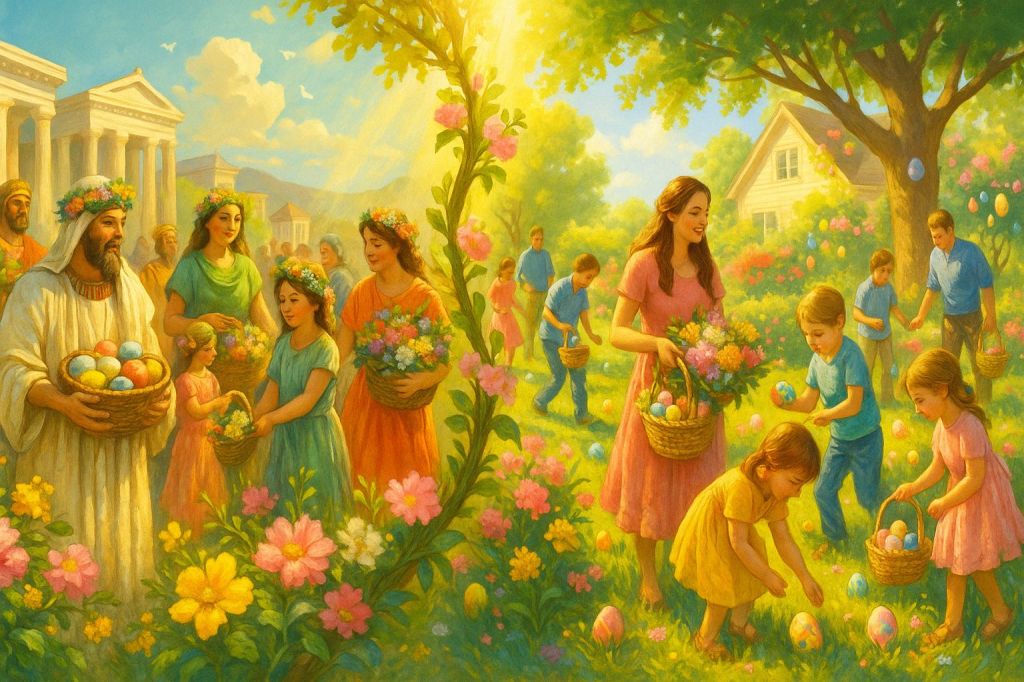
Easter today is known for egg hunts, chocolate bunnies, and family gatherings. But beneath these familiar symbols lie much older, fascinating traditions stretching back thousands of years—far before Christianity itself. So where exactly do Easter’s ancient roots lead us?
Let’s take a quick journey back to discover how springtime traditions from ancient civilizations became the holiday we celebrate today.
From Ostara to Easter
Long before Easter was a Christian holiday, many ancient cultures marked the arrival of spring with celebrations of new life and renewal. One particularly influential tradition was the pagan festival of Ostara, honoring the Anglo-Saxon goddess Eostre, whose symbols were fertility, eggs, rabbits, and flowers.
Sound familiar?
Historians believe early Christians adapted some of these vibrant pagan symbols, blending them with the resurrection story to create the Easter we recognize today.
Eggs, Bunnies, and Flowers—Why These Symbols?
Each of Easter’s symbols carries ancient meaning:
- Eggs: A universal sign of new life and rebirth. Ancient Egyptians, Persians, and Romans all used eggs in their spring festivals.
- Rabbits (and hares): Symbols of fertility due to their prolific reproduction, adopted from Germanic and Celtic springtime rituals celebrating life’s renewal.
- Flowers and blossoms: Echoing celebrations like Floralia in ancient Rome, spring flowers symbolize nature’s rebirth and the return of warmth and life.
When these powerful symbols met the story of resurrection, they seamlessly merged into Easter’s current identity.
Why Does the Date of Easter Change Every Year?
Have you ever wondered why Easter isn’t on a fixed day like Christmas? It’s because Easter’s date was set by an ancient formula: the first Sunday following the first full moon after the spring equinox. This method links Easter directly to older lunar-based festivals celebrated by ancient cultures—another echo of its pagan heritage.
Connecting Past and Present
Modern Easter is beautifully layered with traditions—from chocolate eggs and bunny decorations to church services and spring picnics. Understanding the ancient roots behind these traditions enriches their meaning, reminding us that celebrating spring’s return and life’s renewal is an essential human practice that transcends culture and time.
Your Turn: Which Ancient Traditions Live On in Your Easter?
Does your family embrace traditional egg decorating or an annual egg hunt? Perhaps you’ve wondered about the connection between these customs and ancient spring festivals?
Share your own Easter traditions and memories below—I’d love to hear how history still lives on at your celebrations.
Until next time, keep exploring, keep questioning—and remember: the past is alive every time we celebrate together.
- The Mycenaean legacy: how Greece remembered itself
- Stoicism in Uncertain Times: Ancient Wisdom for Modern Anxiety
- The Map That Shouldn’t Exist: The Mystery of the Piri Reis Chart
- The Sky Stone of Sierra Leone: A Geological Mystery or a Forgotten Artifact?
Discover more from The Time Traveller's Diary
Subscribe to get the latest posts sent to your email.
