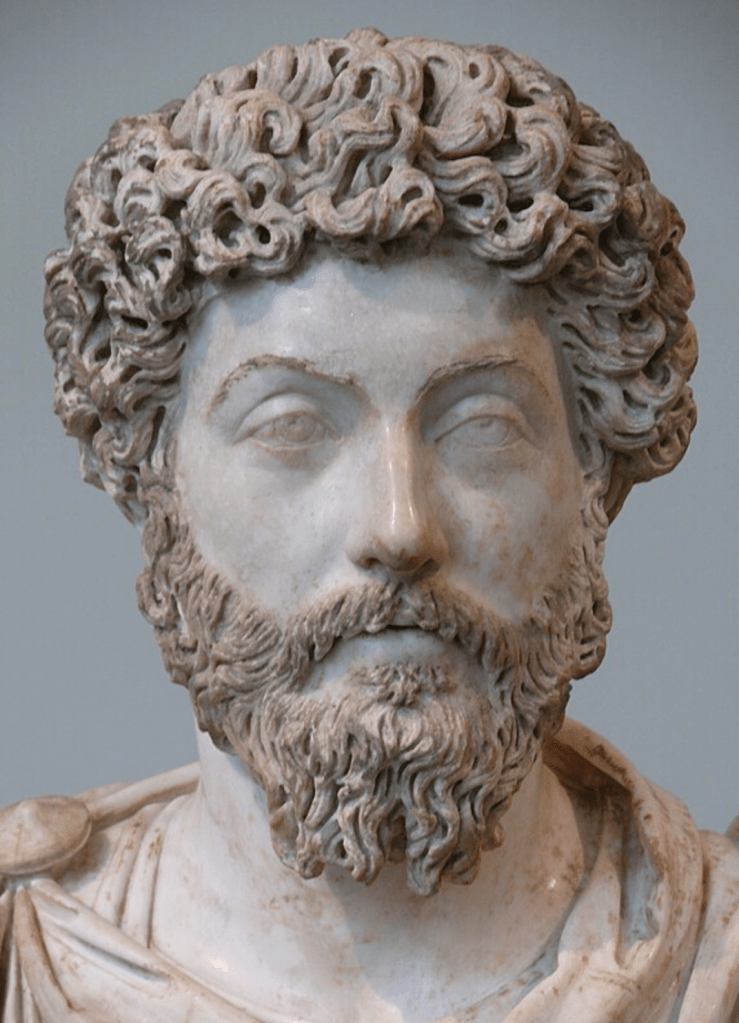
Roman, Antonine period
(Metropolitan Museum of Art, NY).
Credit: © Ad Meskens / CC BY-SA 3.0
We live in an age of constant notifications, endless headlines, and an undercurrent of anxiety about everything from politics to pandemics. Yet, long before social media or 24-hour news cycles, people grappled with similar feelings of worry and uncertainty.
Enter Stoicism—an ancient Greek and Roman philosophy designed specifically for uncertain times. Nearly two thousand years ago, Stoic philosophers like Seneca, Marcus Aurelius, and Epictetus offered wisdom to help people find peace in chaos.
But can Stoicism really help us navigate today’s turbulent world?
Let’s take a closer look.
What Exactly Is Stoicism?
Stoicism, a word founded around 300 BCE by the Greek philosopher Zeno, is centered on a simple but powerful idea: you can’t control external events, only your responses to them.
Stoics advocated calm acceptance, clear thinking, and purposeful action, even (and especially) in challenging situations. Rather than reacting emotionally or impulsively, Stoics taught that serenity comes from controlling your own thoughts and attitudes.
Stoic Principles for Modern Life
Here’s how some core Stoic teachings resonate deeply today:
- Control vs. Acceptance
Stoics believed in clearly distinguishing between things we can control (our own actions, thoughts, and responses) and those we cannot (the actions of others, world events, natural disasters).
Today: Accepting you can’t change global events can reduce stress and anxiety significantly.
- Perception Shapes Reality
Epictetus famously said, “Men are disturbed not by things, but by the view which they take of them.” The meaning you assign to an event affects how you feel about it.
Today: Reframing negative headlines or stressful situations helps maintain emotional balance.
- Mindfulness & Reflection
Marcus Aurelius wrote daily reflections in his Meditations, cultivating self-awareness and inner calm.
Today: Journaling, mindfulness apps, and meditation practices echo Stoicism’s encouragement of thoughtful reflection and self-awareness.
Stoicism in Action: Real-World Examples
Modern leaders, athletes, and everyday people increasingly turn to Stoicism:
- Business Leaders: CEOs and entrepreneurs read Meditations for guidance on managing stress and making clearer decisions.
- Athletes: Sports psychology often draws directly on Stoic teachings about mental toughness and resilience.
- Crisis Response: During recent global challenges, Stoicism experienced a resurgence as people sought practical ways to cope with uncertainty and anxiety.
Is Stoicism a Cure-All?
Stoicism isn’t about ignoring emotion or hardship. Rather, it’s about navigating difficult times with grace, clarity, and resilience. By adopting a Stoic mindset, you don’t eliminate problems—but you gain better tools to face them calmly and effectively.
Your Turn—Can Ancient Philosophy Help Today?
Have you used Stoic principles in your daily life? Could ancient wisdom truly help manage modern anxieties? Share your thoughts and experiences in the comments—I’d love to hear how Stoicism resonates with you today.
Until next time, keep exploring, keep questioning, and remember: the wisdom we seek often lies hidden in the past.
- The Mycenaean legacy: how Greece remembered itself
- Stoicism in Uncertain Times: Ancient Wisdom for Modern Anxiety
- The Map That Shouldn’t Exist: The Mystery of the Piri Reis Chart
- The Sky Stone of Sierra Leone: A Geological Mystery or a Forgotten Artifact?
Discover more from The Time Traveller's Diary
Subscribe to get the latest posts sent to your email.
